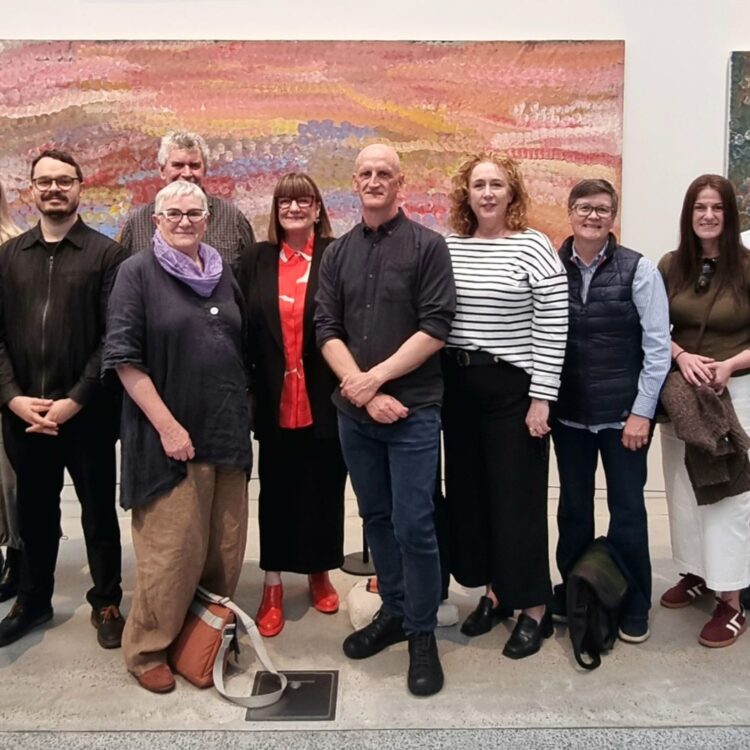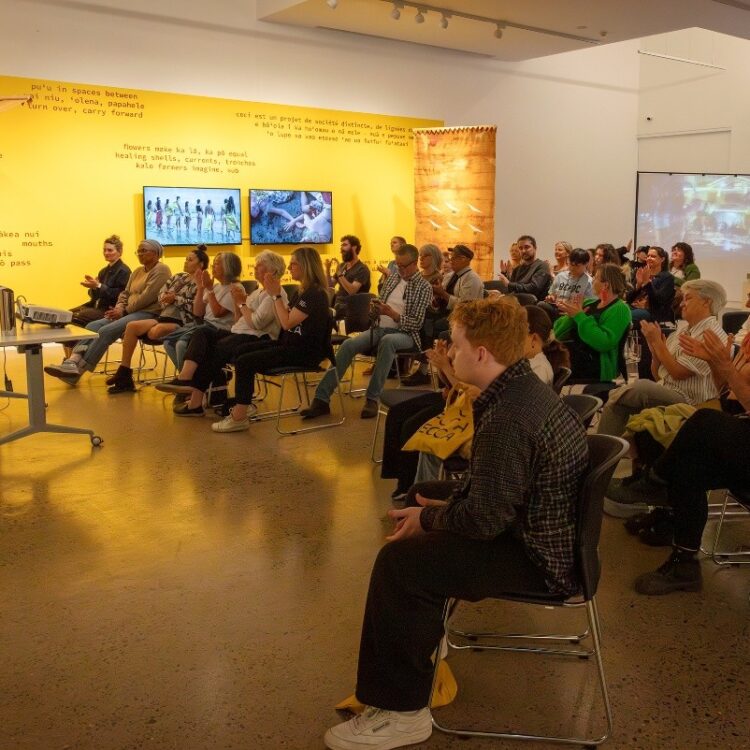
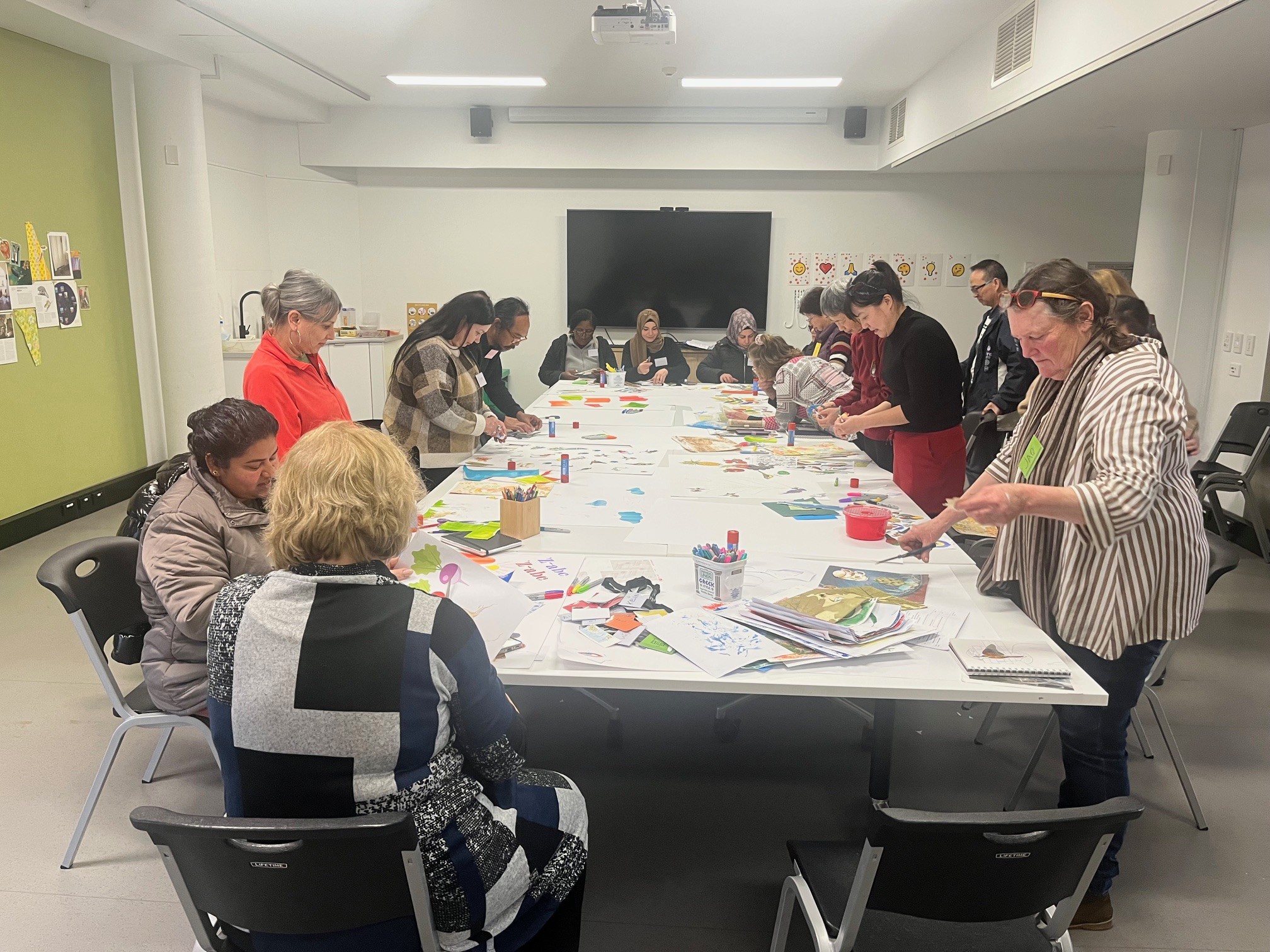
Connecting to Place participants and Artist Educators working on a collaborative ‘cultural collage’ response to works in ARTEXPRESS 2025.
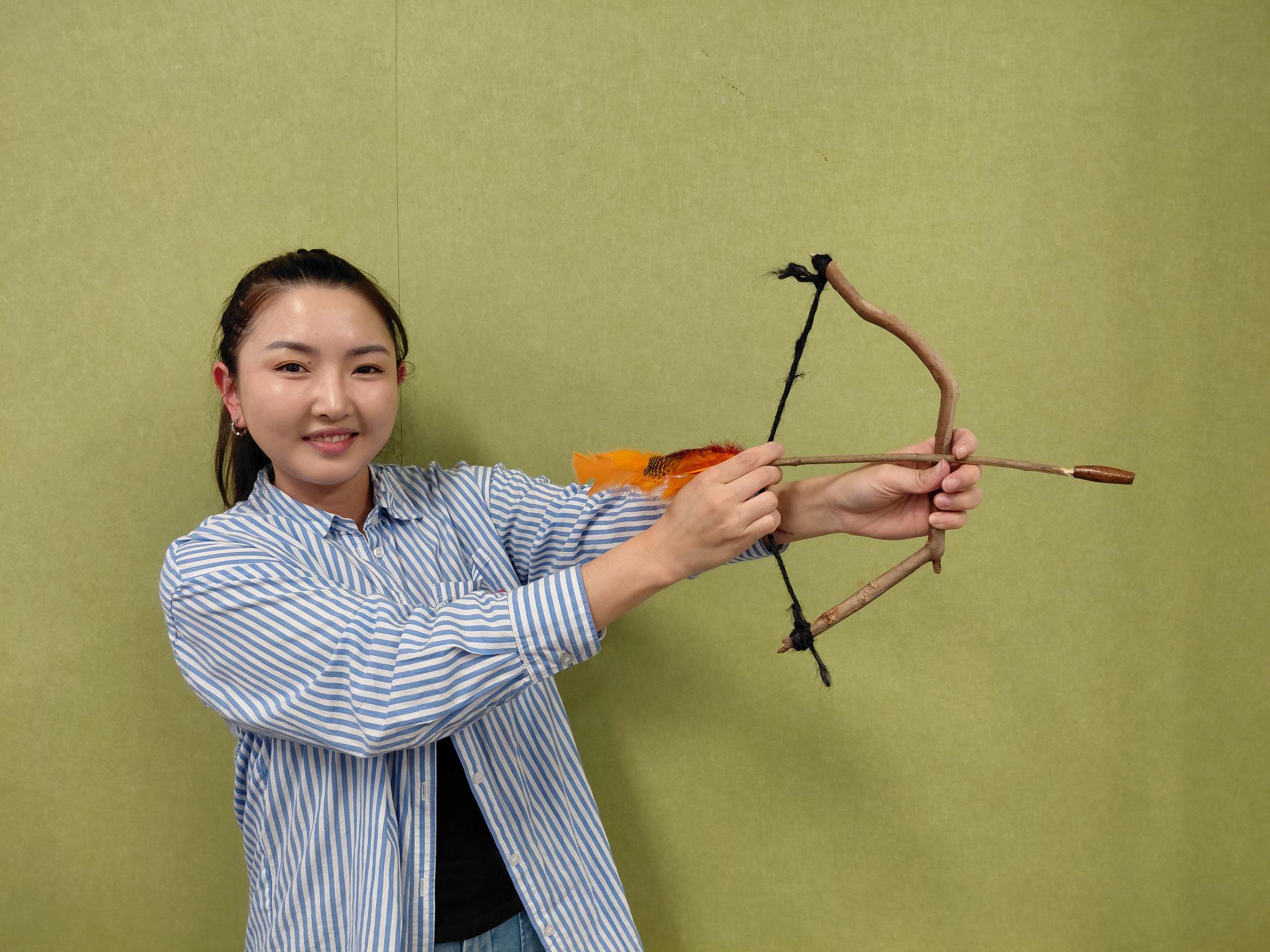
Connecting to Place participant Dolgor Baasanjav with her sculptural response to Harrie Fasher Before Dawn, a link to her Mongolian culture.
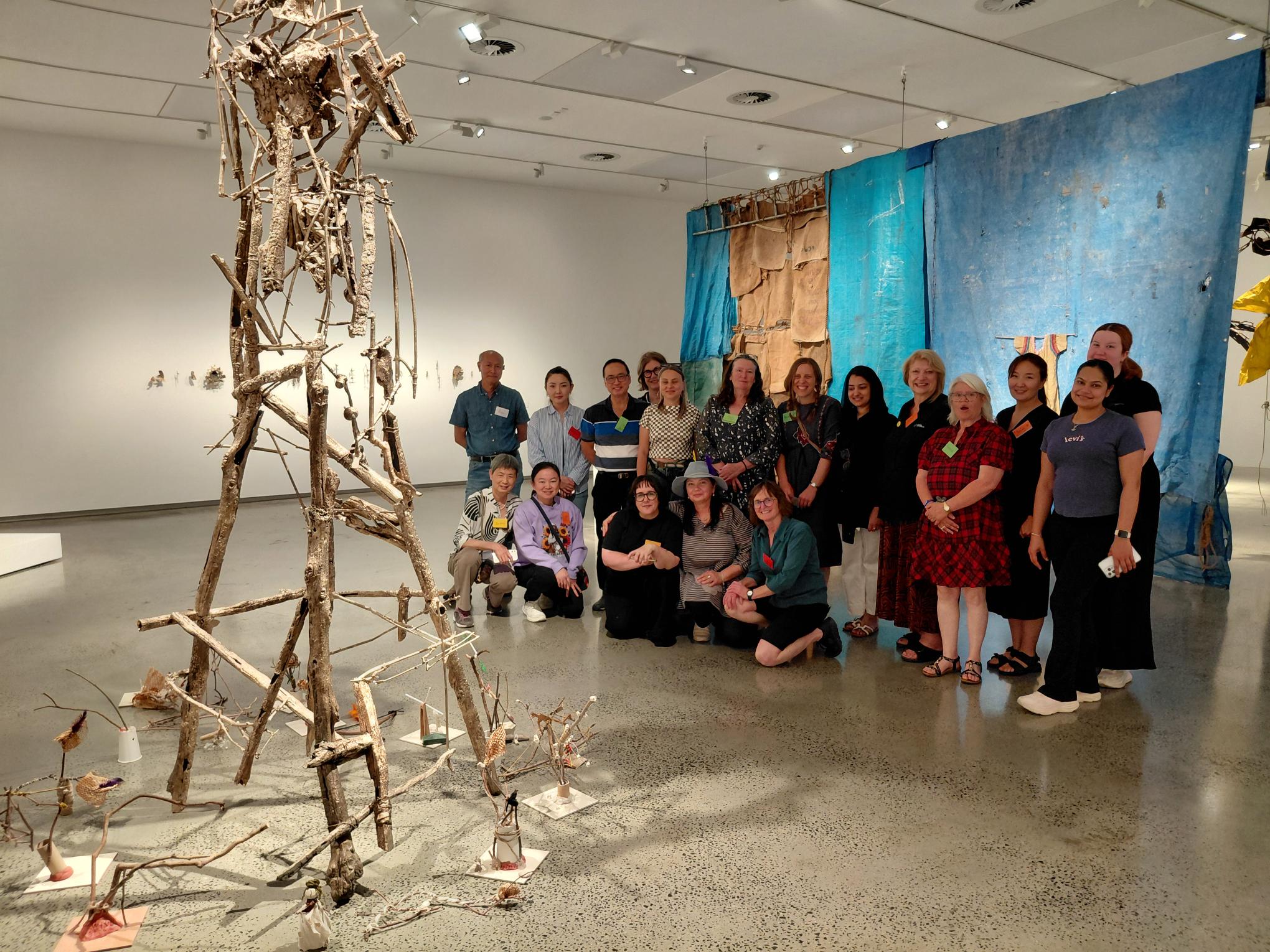
Connecting to Place session in Harrie Fasher: Before Dawn (with participants artwork on the floor).
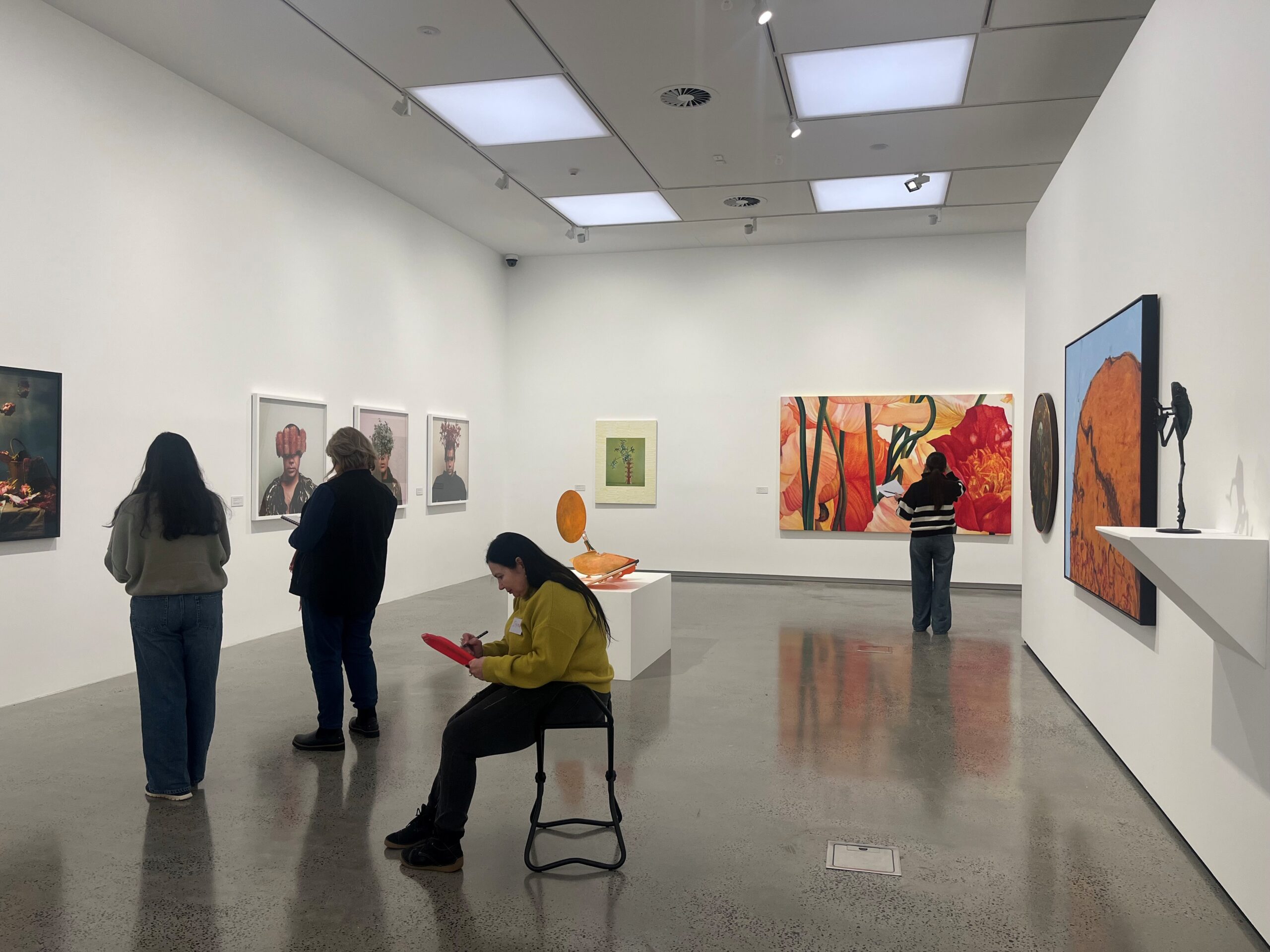
Connecting to Place participants spend time in Cherished: Recent acquisitions from a generous community.
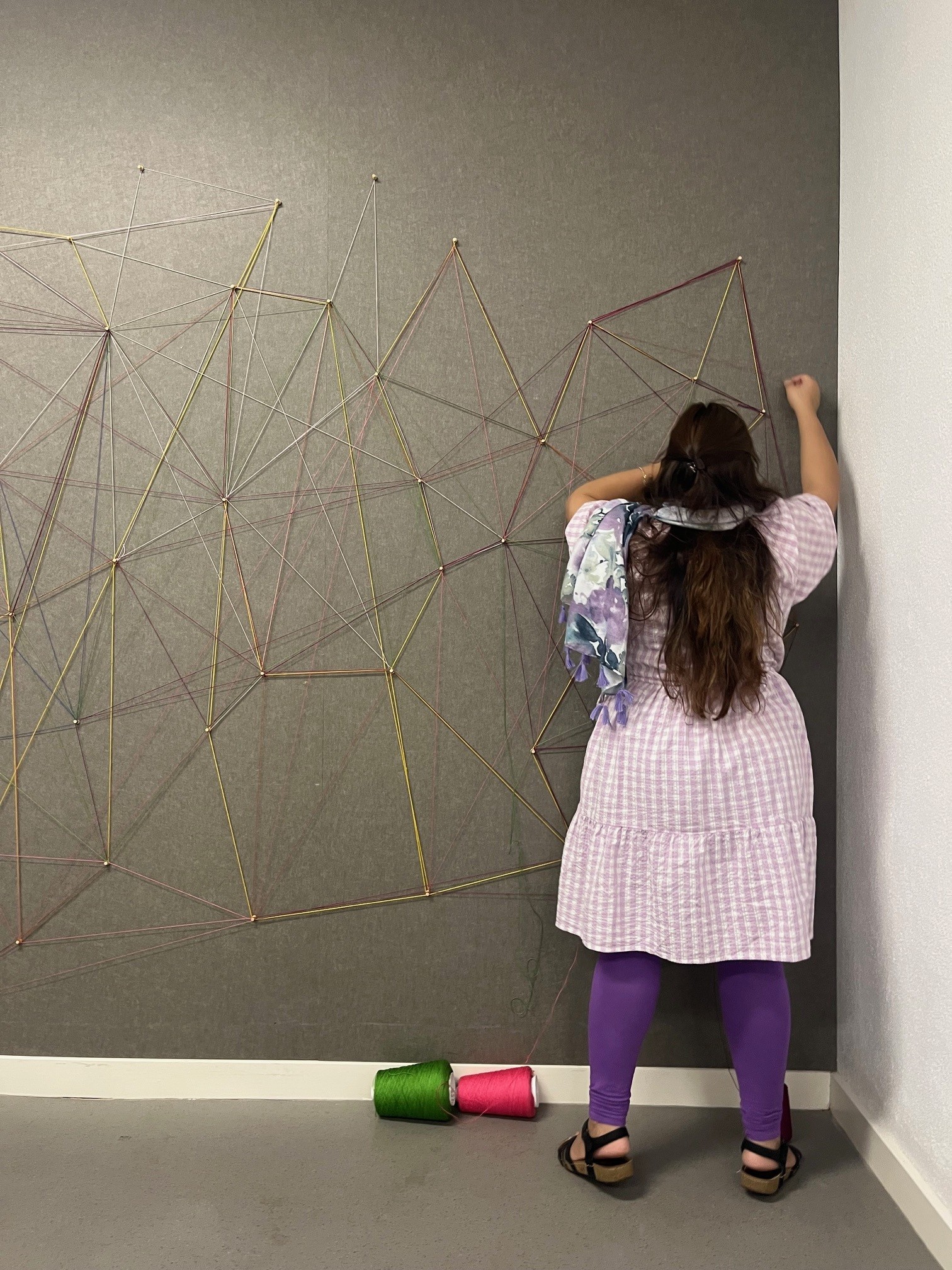
A Connecting to Place participant working on a collaborative string drawing in response to artworks in Orange Regional Gallery’s Collection.
Cecilie Knowles, Public Engagement & Education Officer at Orange Regional Gallery, co-developed the pilot art and wellbeing program Connecting to Place to foster meaningful and ongoing relationships between the Gallery and migrant and refugee communities, supporting wellbeing and social connection. Developed in collaboration with Engagement Consultant Gill Nicol, the program was supported through an Audience Development Fund grant awarded in 2024 and delivered across 2025 and 2026.
Tell us about how this project originated and how you identified specific needs in your community?
‘Connecting to Place’ emerged through conversations between Gallery Director Bradley Hammond and audience engagement specialist Gill Nicol about the growing evidence for art and wellbeing approaches, and the Gallery’s role in responding to social challenges in ways that connect and create shared meaning. We were already delivering strong public programs but the migrant and refugee community were not consistently visiting the Gallery. We saw an opportunity to partner with Orange City Council’s Migrant and Refugee Support Service (OMRSS) to build a meaningful, sustained relationship with this community and to test how an art and wellbeing framework might support a new audience and inform future programming. The funding offered through M&G NSW was vital in enabling us to pilot this new approach
How did the program run in practice, what did participants gain, and what partnerships emerged through the project?
The program welcomed participants from diverse cultural and linguistic backgrounds for monthly two-hour sessions at the Gallery, with one additional outdoor excursion. Sessions followed a consistent, carefully structured format: shared lunch; slow-looking and discussion of one or two artworks in the Gallery; and open-ended creative activities led by our wonderful team of Artist Educators, Jaq Davies, June Golland, Heather Valance and Antariksa, who co-developed and delivered the program with an approach that prioritised care, inclusion, flexibility and collaboration.
Early conversations with OMRSS Migrant Support Officer Anni Gallagher identified an opportunity to connect with the Adult Migrant English Program, a free English language service offered through TAFE NSW. We were able to confirm with the enthusiastic team of TAFE teachers, Katrina Walker, Sharyn Mckinnon and Vicki George that the session at the Gallery would be a welcome addition to their program. We established that students and teachers would come across from TAFE during their lunch break, bringing their lunch to be shared in our activity space with the session to follow. This relationship with TAFE has been a delightfully unexpected ‘bonus’ partnership that has proved fundamental to the success of the program with teachers working with us to provide information to students, encouraging attendance and supporting students during each session.
Gill’s expert evaluation was embedded into the program from the outset and included quantitative and qualitative methods: attendance tracking; pre-and post-program surveys; emoticon-based wellbeing check-ins; observation; interim reflection meetings; interviews with stakeholders; and documentation of artworks and processes. The overarching evaluation question asked how structured workshops at the Gallery, engaging with contemporary art and nature, supported the wellbeing of migrant and refugee communities.
Key findings from the Connecting to Place Evaluation Report, prepared by Gill Nicol, demonstrate that the program was highly successful. Participants felt welcome and comfortable from the outset, with the shared meal and informal social time playing a crucial role in building trust and connection. Over time, there was clear evidence of increased confidence, joy, emotional expression, pride, social connection and a sense of belonging. While the program was initially framed around combatting loneliness, an important learning was the distinction between loneliness and belonging. Participants already met as a community through TAFE; what the Gallery offered was a sense of belonging in this cultural space. Participants connected across language barriers, found meaning in artworks, and experienced their inner lives as valued and visible. This reframing has implications for future programming: the Gallery is not only a place of activity, but a place where people feel they belong.
Many participants reported feeling relaxed, happy and uplifted, and expressed a strong desire for the program to continue.
The program also had a significant impact on our team and the artist educators who described a strong sense of pride, joy and professional growth. Artist educators felt supported, safe and inspired, and reported that the experience reconnected them with the fundamental purpose of engaging people through art.
What challenges did you face during the delivery of the program, and how did you adapt or modify the delivery?
By approaching the program as a pilot and consciously reflecting, reviewing and adapting as we went along, a solid session framework was able to be developed. For example, sessions were able to be adjusted after we noticed early on that most people were happy to spend more time than we had allowed for in the Gallery, looking at and talking about the artworks. By remaining flexible, the sessions could be reframed to better reflect what participants seemed keen to do.
Some planned outdoor components were reduced, largely due to weather. An important and highly anticipated session was an excursion to a local waterfall with lunch, a slow-looking session and an artmaking activity delivered in nature. This session was thwarted by inclement weather on two occasions but was eventually delivered in an adapted form and enjoyed very much by the group. When planning for future programs, we will look for a location that has backup shelter options.
Another unexpected outcome related to fluctuating attendance from month to month. This highlighted how important the connection with TAFE has been. Participants attend as an existing group, arriving together and with established friendships, which has made engagement far easier than if individuals had been approached separately in their homes. The TAFE teachers have also offered a range of explanations for lower attendance at times, including quieter periods in classes and changes in weather conditions.
After the success of this program, how do you see this model of community engagement being used in the future across your other gallery programs?
‘Connecting to Place’ has demonstrated that an art and wellbeing approach can successfully engage a new audience, combat loneliness, build social connection and belonging, and enrich the Gallery’s public program offering. There is strong potential for this model to become an overarching framework for future engagement with other community groups supported by Council’s Community Services.
What were some of the key learnings for you and the delivery team? Do you have any insights for other organisations creating new audience development programs?
With new audiences, partnerships are central to success! OMRSS played a vital role in supporting inclusion and confidence, while the involvement of TAFE teachers proved to be an unexpectedly critical factor. Teachers scaffolded language learning, reinforced art vocabulary, encouraged attendance and supported participants during sessions. This partnership significantly enhanced participant confidence, engagement and continuity.
The artist educators brought so much skill and creative heart to the program, generously sharing their ideas and creative strategies throughout the planning and subsequent delivery of the program.
Working with Gill was also vital to the success of the program. She provided training in wellbeing before the program began and supported this learning through associated resources. Gill supported the program throughout the development phase, guidance and feedback and then regularly checking in throughout delivery, attending selected sessions and thoroughly evaluating the program from start to finish. The comprehensive evaluation report provided by Gill will help guide ‘Connecting to Place’ going forward and influence similar programs for many years to come.
Insights interview conducted by Vanessa James, Exhibitions & Programs Coordinator, Museums & Galleries of NSW.
Insights is an interview series highlighting the voices of museum and gallery professionals across New South Wales. The series features conversations with individuals working at the forefront of the sector, demonstrating how their ideas, leadership and day-to-day practice contribute to a more vibrant, resilient and inclusive future for museums, galleries and Aboriginal cultural centres.
If you would like to participate in our Insights series, please get in contact.