Spence Messih | A river runs through – ENGAGEMENT AND REACH
Across M&G NSW’s touring exhibitions there are in-built programs that promote community interaction, practical learning opportunities, professional development, and new tools for connecting with audiences. Our touring exhibitions and programs are designed to prioritise access and accessibility, providing regional audiences with ‘the opportunity to access and participate in arts and culture’, whilst presenting creative practice ‘reflecting the breadth of our stories’ – key pillars and principles of REVIVE – the National Cultural Policy.
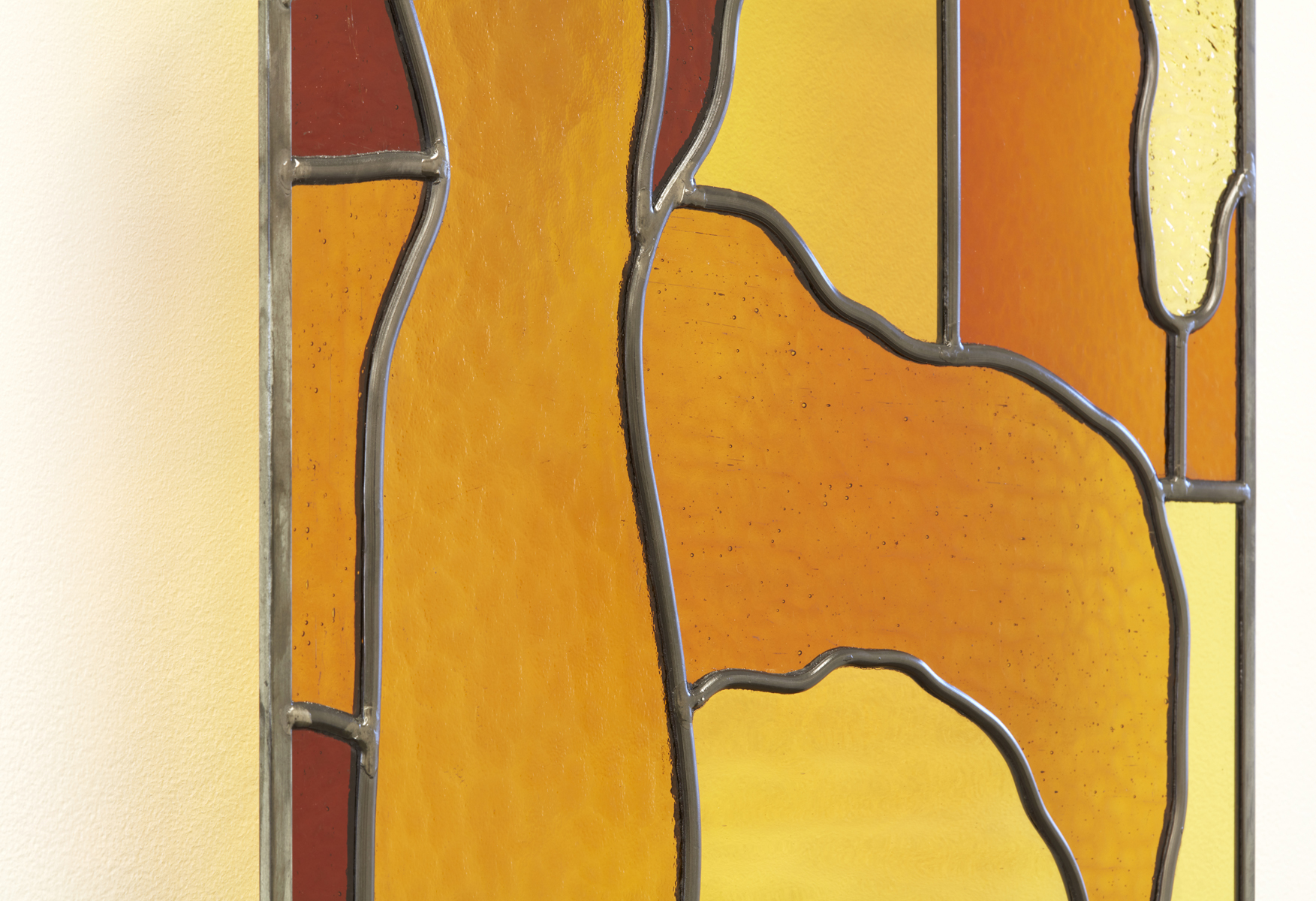
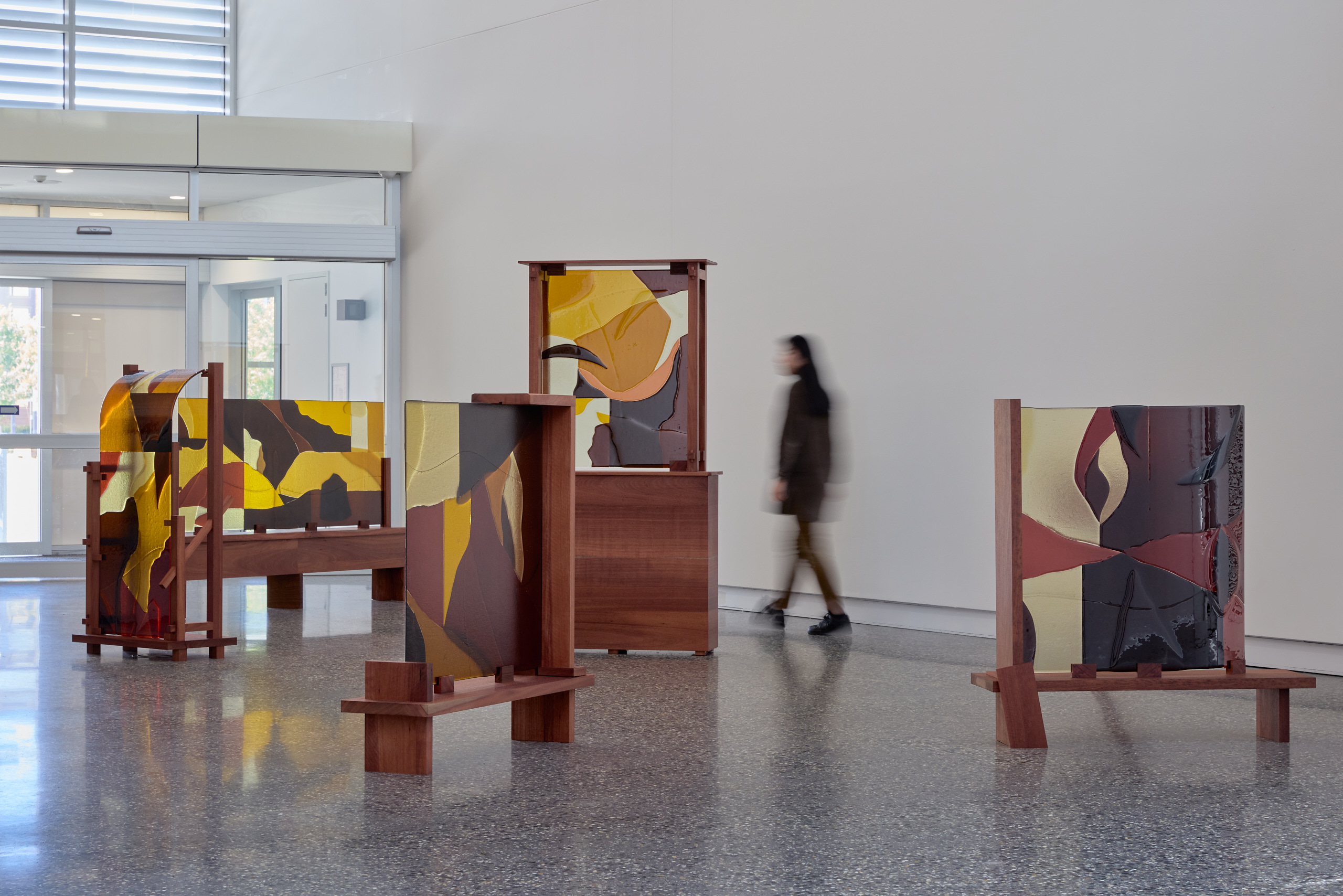
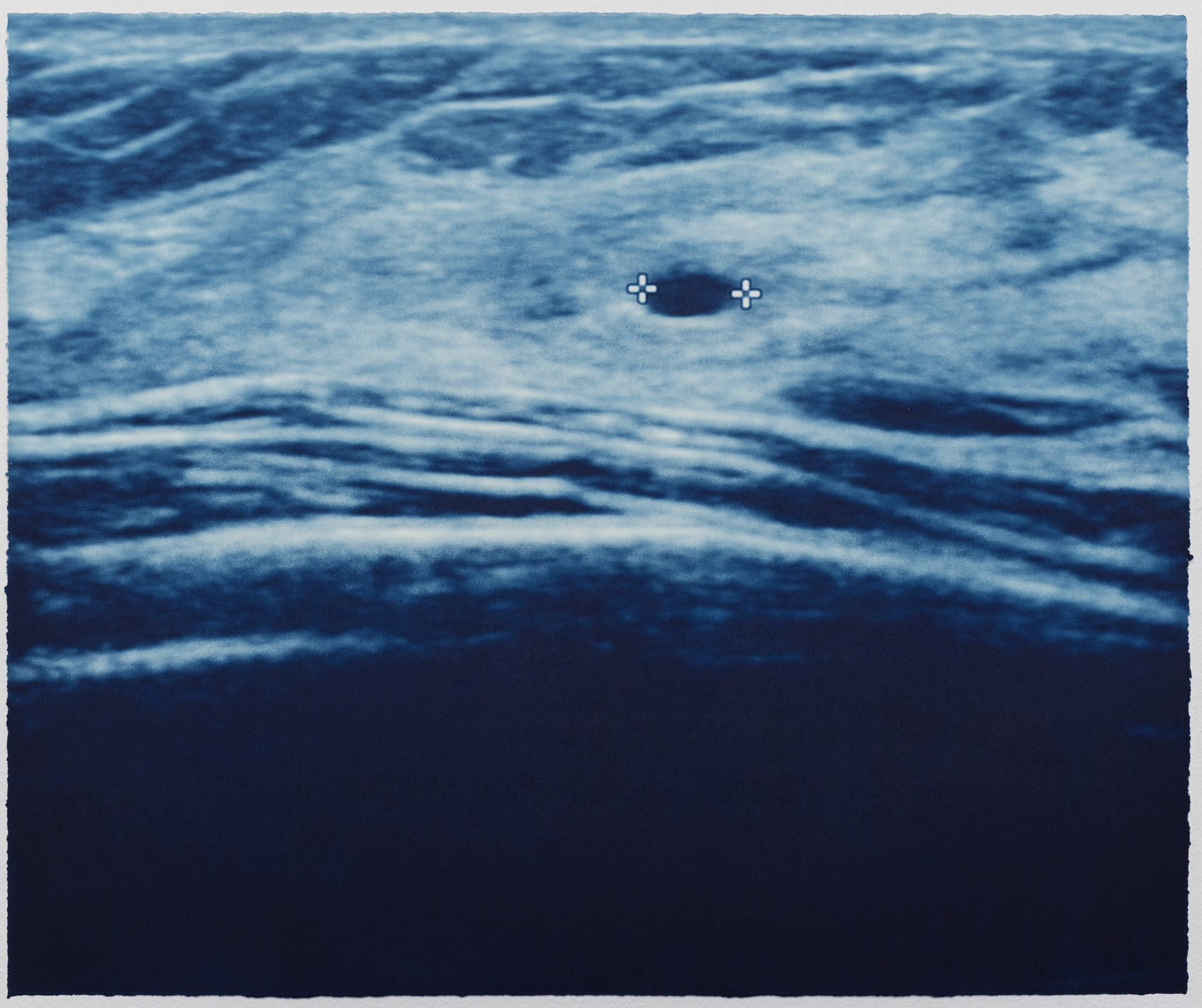
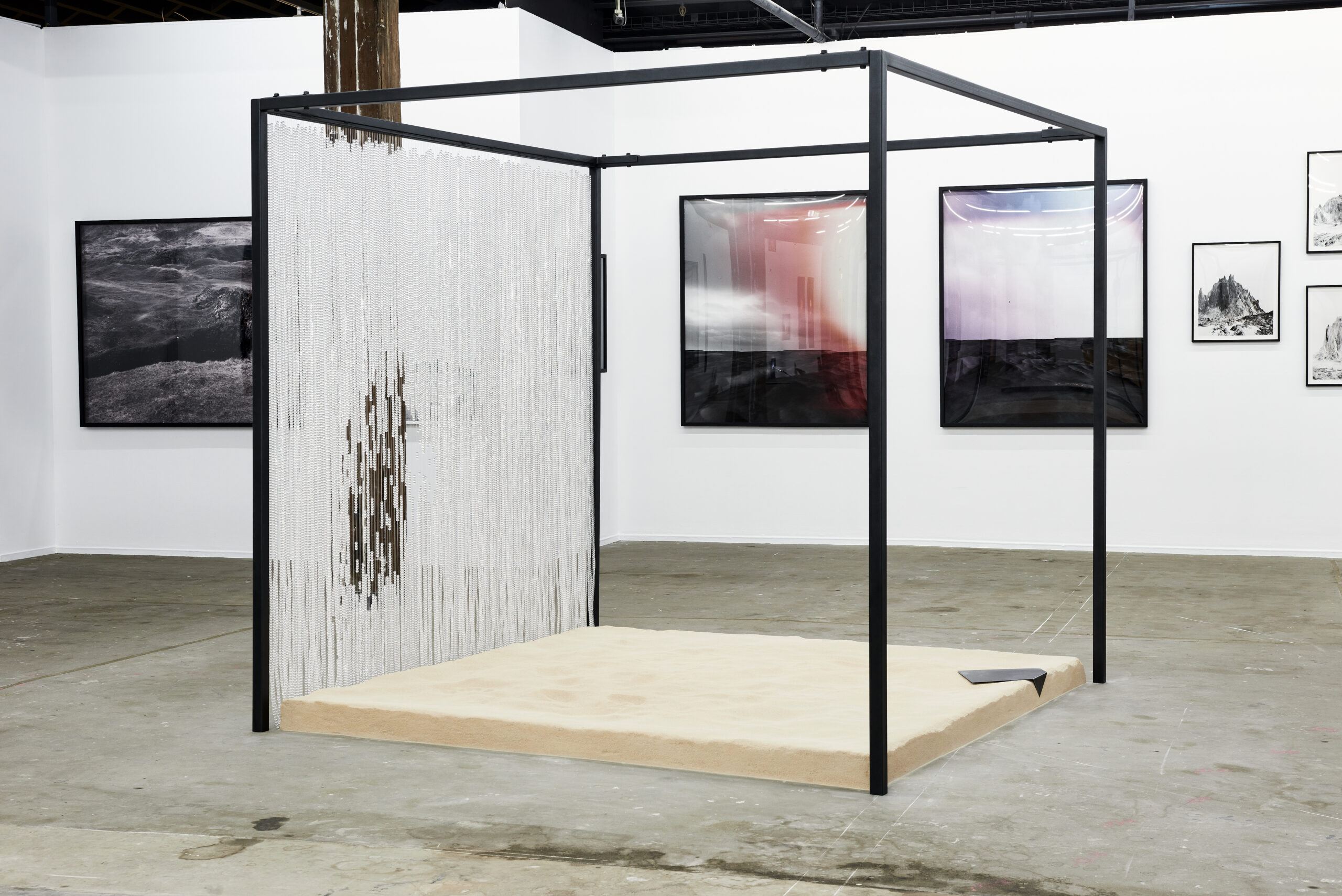
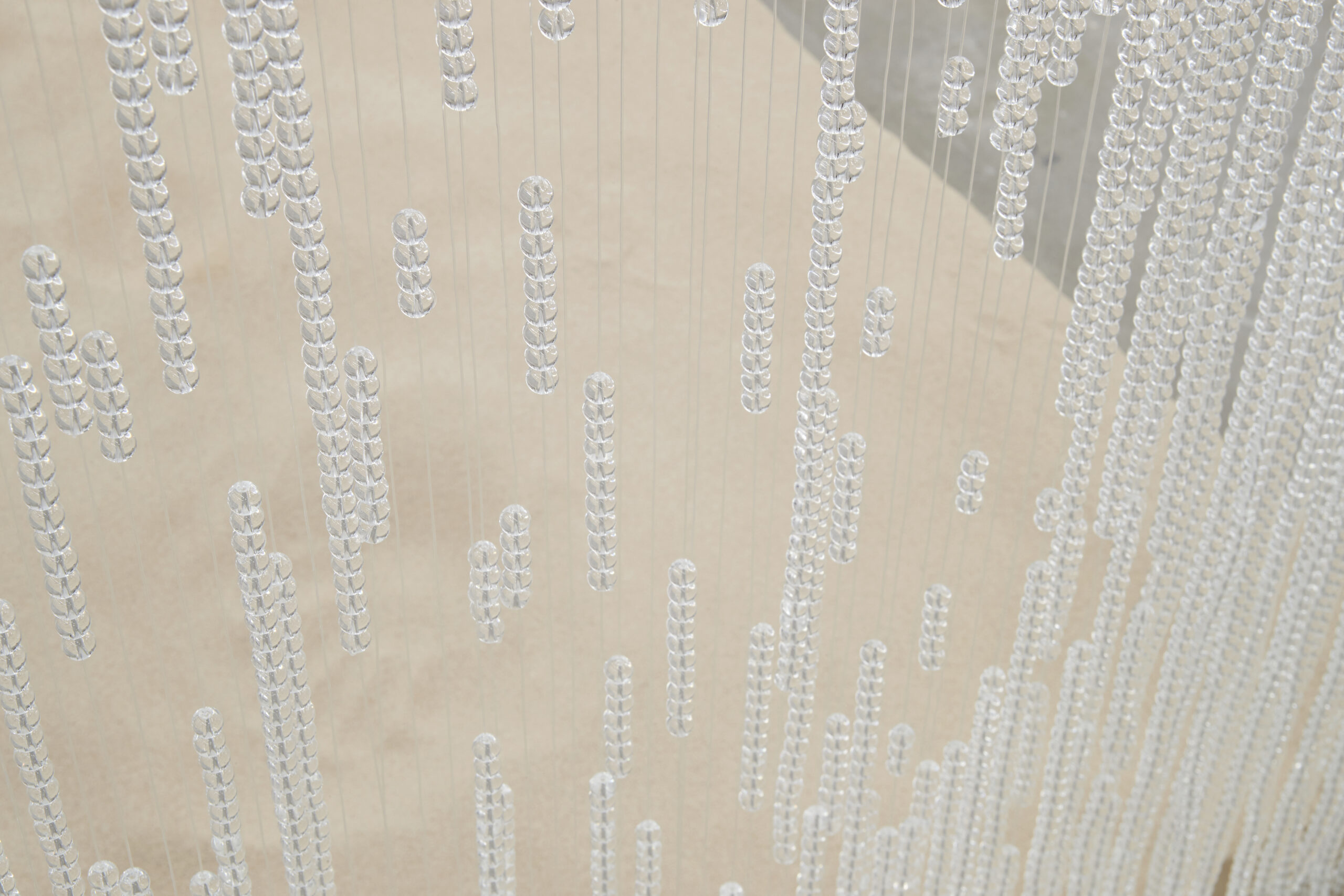
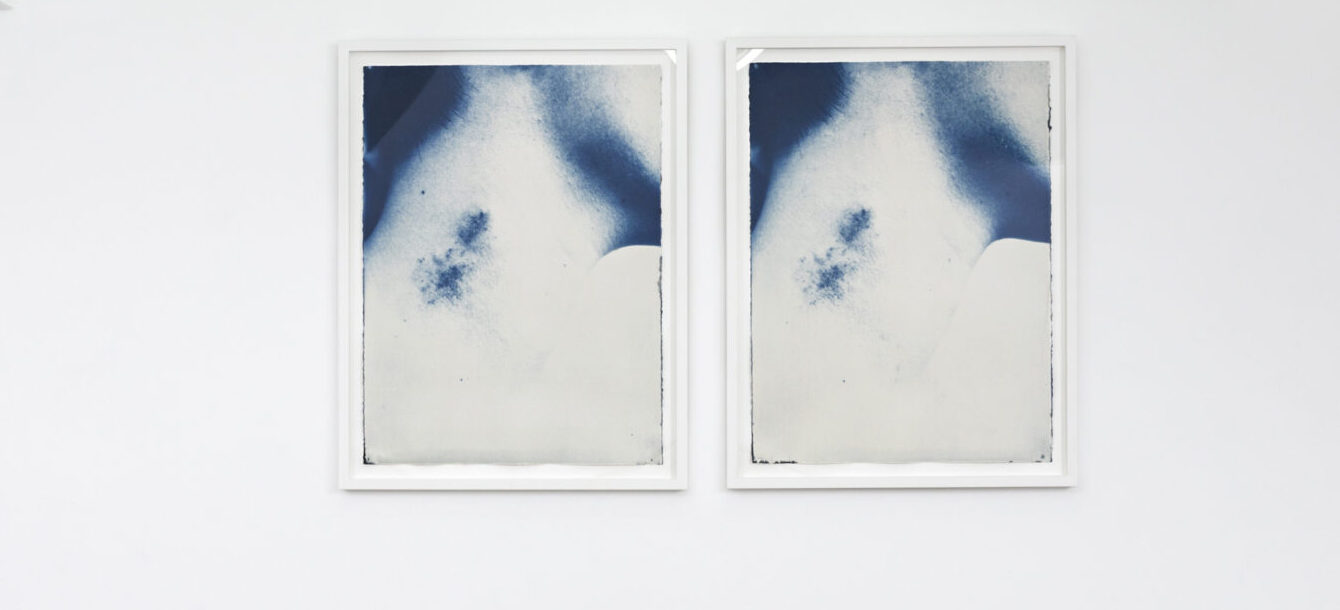
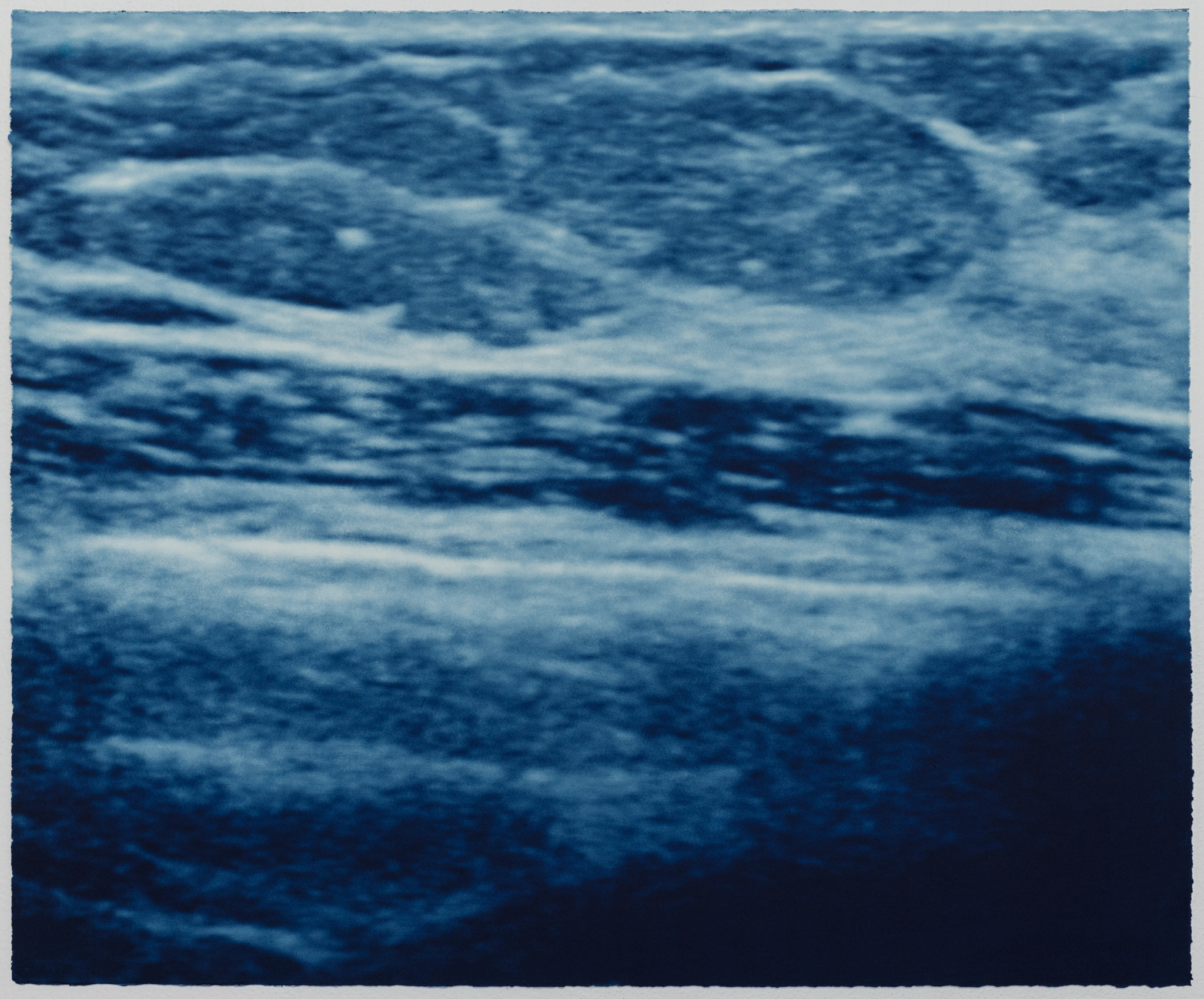
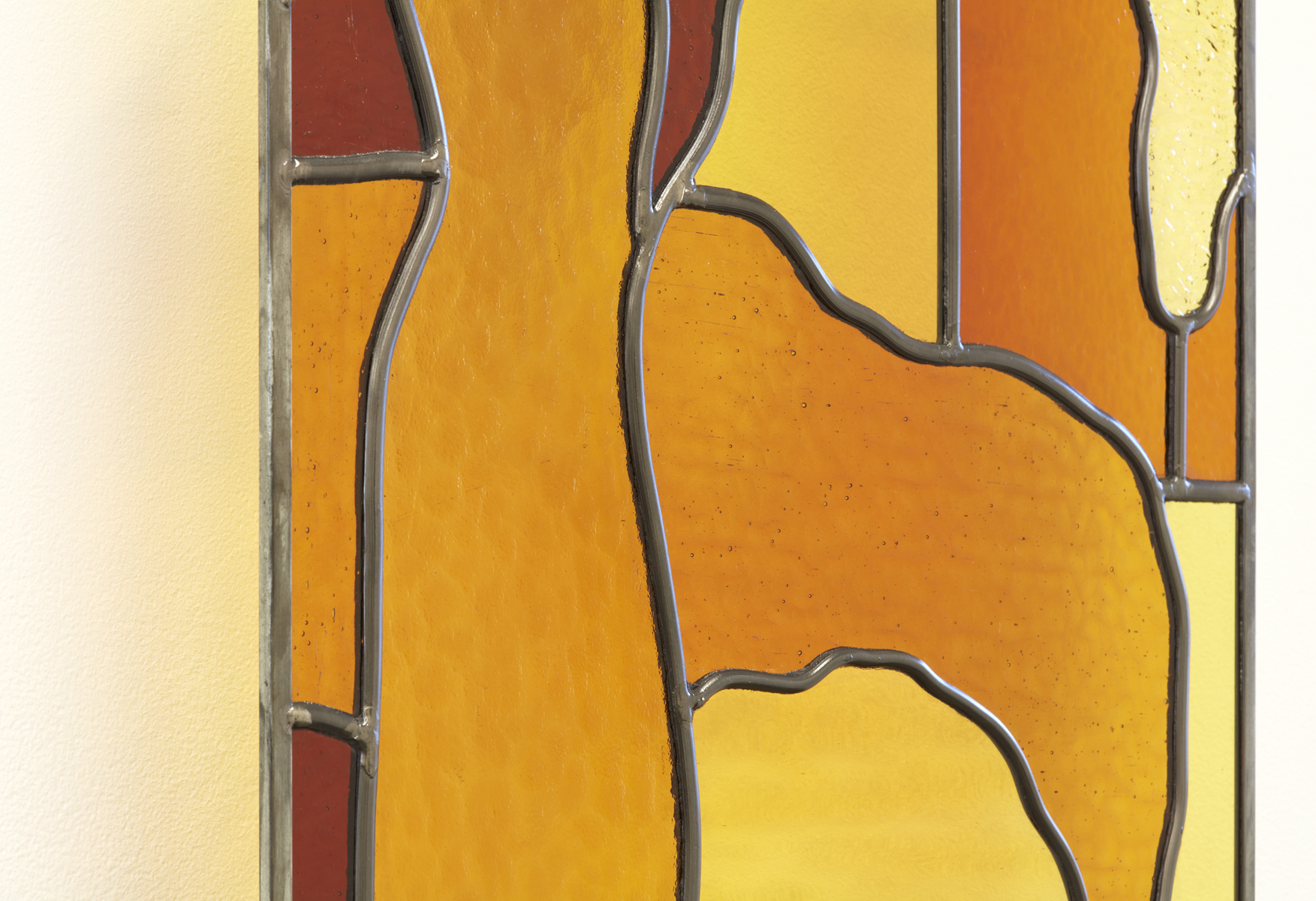
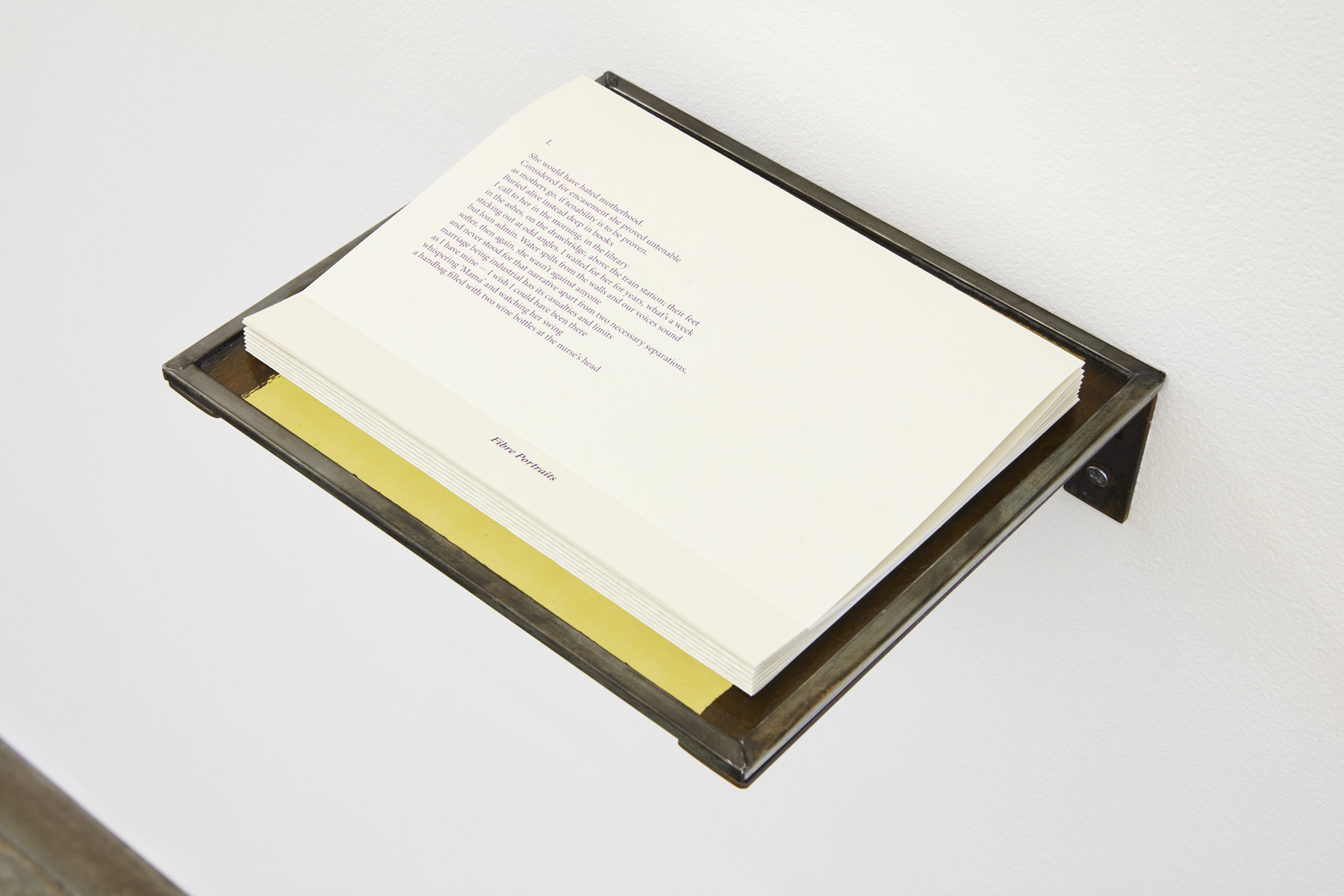
Spence Messih | A river runs through examines how personal and collective experiences are shaped by broader political and environmental histories, with a new body of work comprising kiln-formed glass and timber marquetry sculptures, film, photogravure prints and commissioned texts. The exhibition will tour to six venues across three calendar years providing ‘long-term and sustainable’ career benefits for the artist including increased exposure and engagement across regional locations in four states. There will be additional benefits for regional venues and communities, with opportunities for audiences to engage with the recently created works of a highly regarded mid-career contemporary artist, and the reciprocal exchange of knowledge between the artist and local communities. Tour venues have been strategically chosen to align with the themes of the exhibition to allow communities to delve deeper into their local ecological histories, water systems and identities through public programming.
A river runs through will tour with an Education Kit and Mediation Handbook, a range of engagement facilitation tools, and public programming scaffolds, to promote audience engagement with the themes of the exhibition.
A river runs through | LETTERS OF SUPPORT
Our touring exhibitions are developed with the needs of regional and public galleries and their audiences in mind. These letters of support from artist Spence Messih, partners UTS Gallery & Art Collection and venues Goulburn Regional Gallery, Lismore Regional Gallery, Griffith University Art Museum, JamFactory Adelaide, and LaTrobe Regional Gallery demonstrate the enthusiasm for this touring exhibition which will speak to varied communities and provide opportunities to strengthen engagement with them.
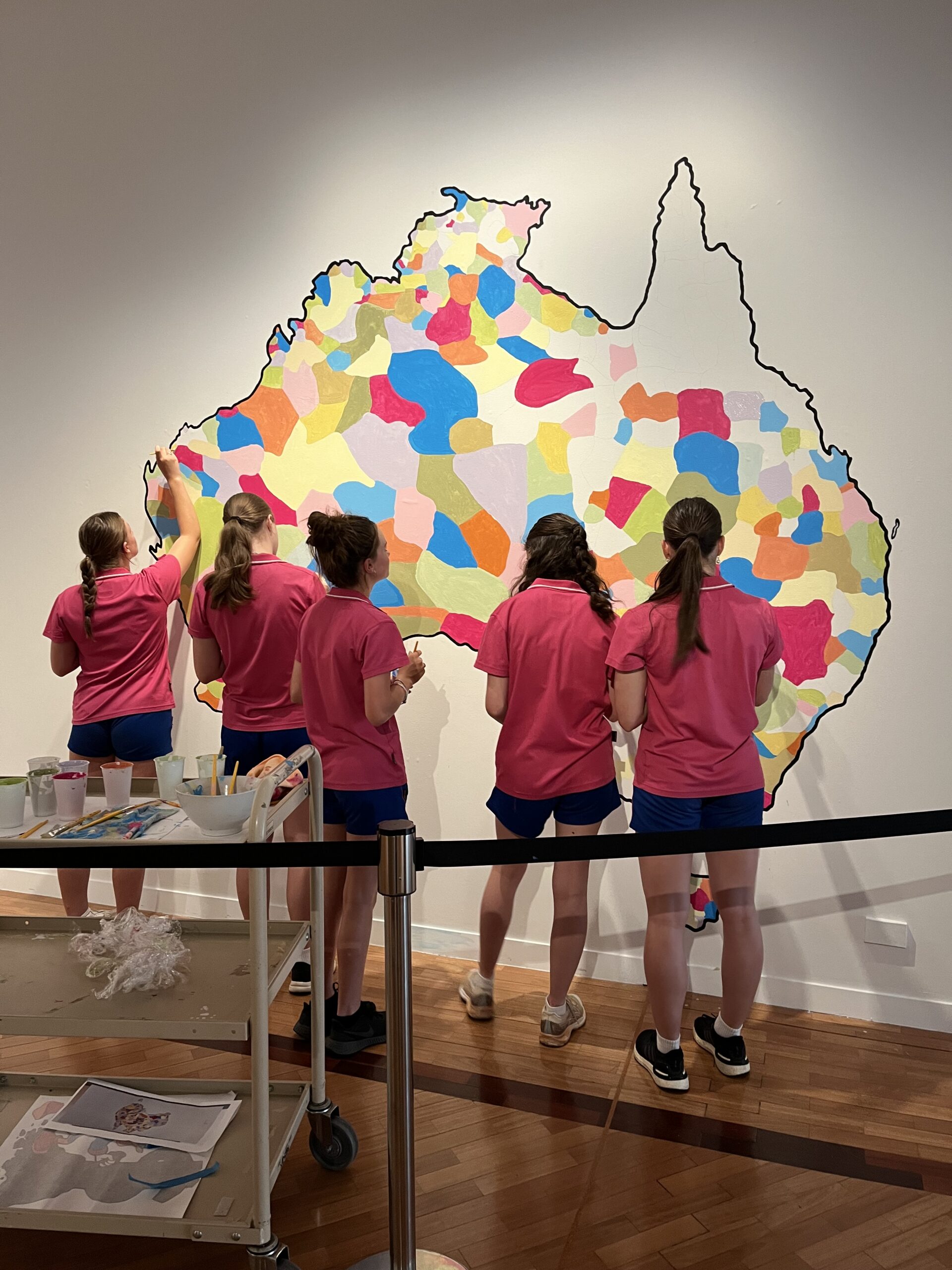
Students painting Tony Albert’s Terra Nullius (with Scrooge), OCCURRENT AFFAIR, Gosford Regional Gallery. Photo: Courtesy Gosford Regional Gallery

proppaNOW, OCCURRENT AFFAIR Education Symposium, NAS Gallery, National Art School, NSW, 2023. Photo: Jacquie Manning
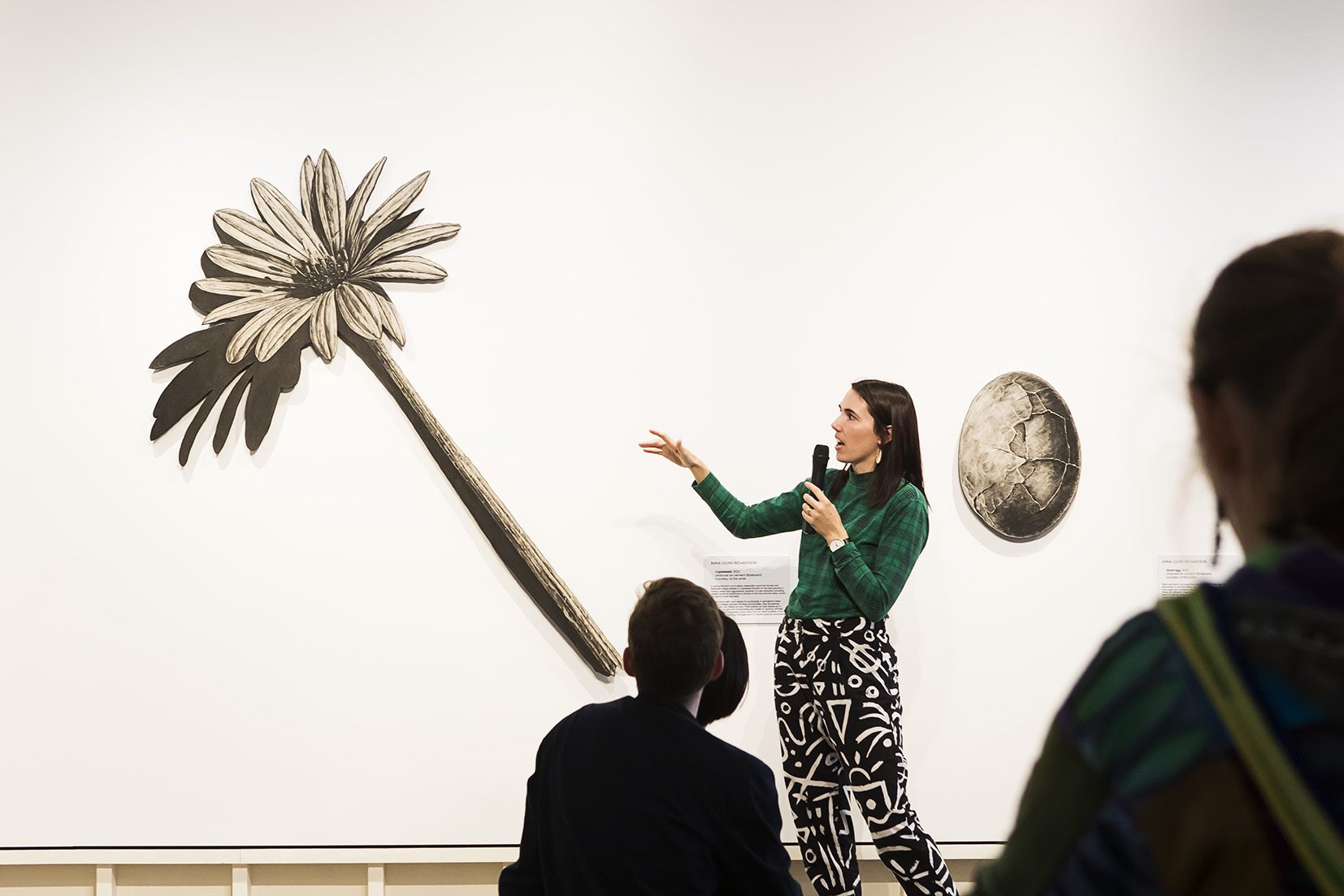
Artist Anna Louise Richardson speaking at The Good, opening event at The Condensery, QLD, 2023. Photo: Jim Filmer
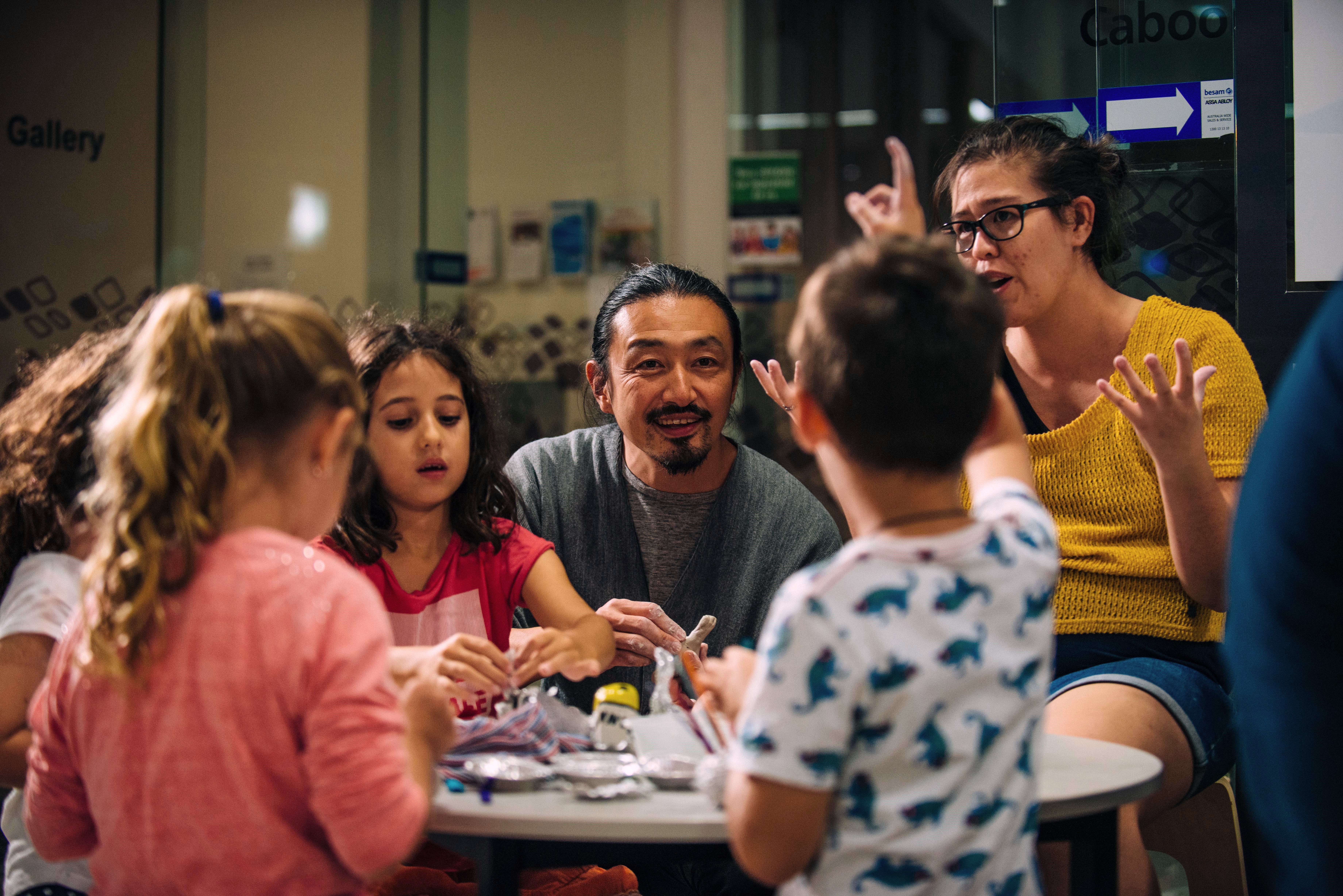
Soft Core artist Koji Ryui undertaking workshops at Caboolture Regional Art Gallery. Photo: Simon Woods
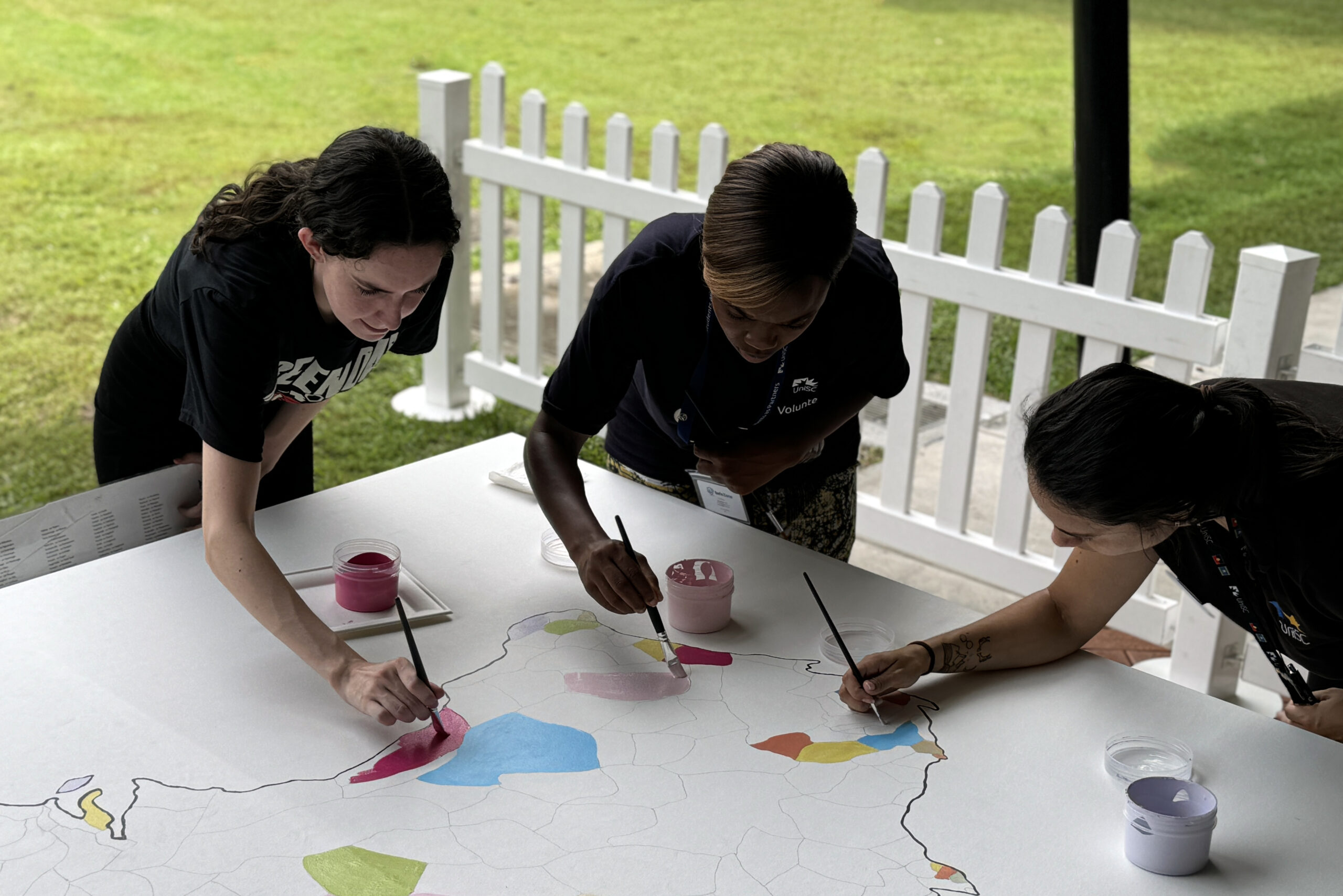
Students painting Tony Albert’s Terra Nullius (with Scrooge), University of Sunshine Coast Connect Week, OCCURRENT AFFAIR. Photo: Courtesy University of the Sunshine Coast Art Gallery
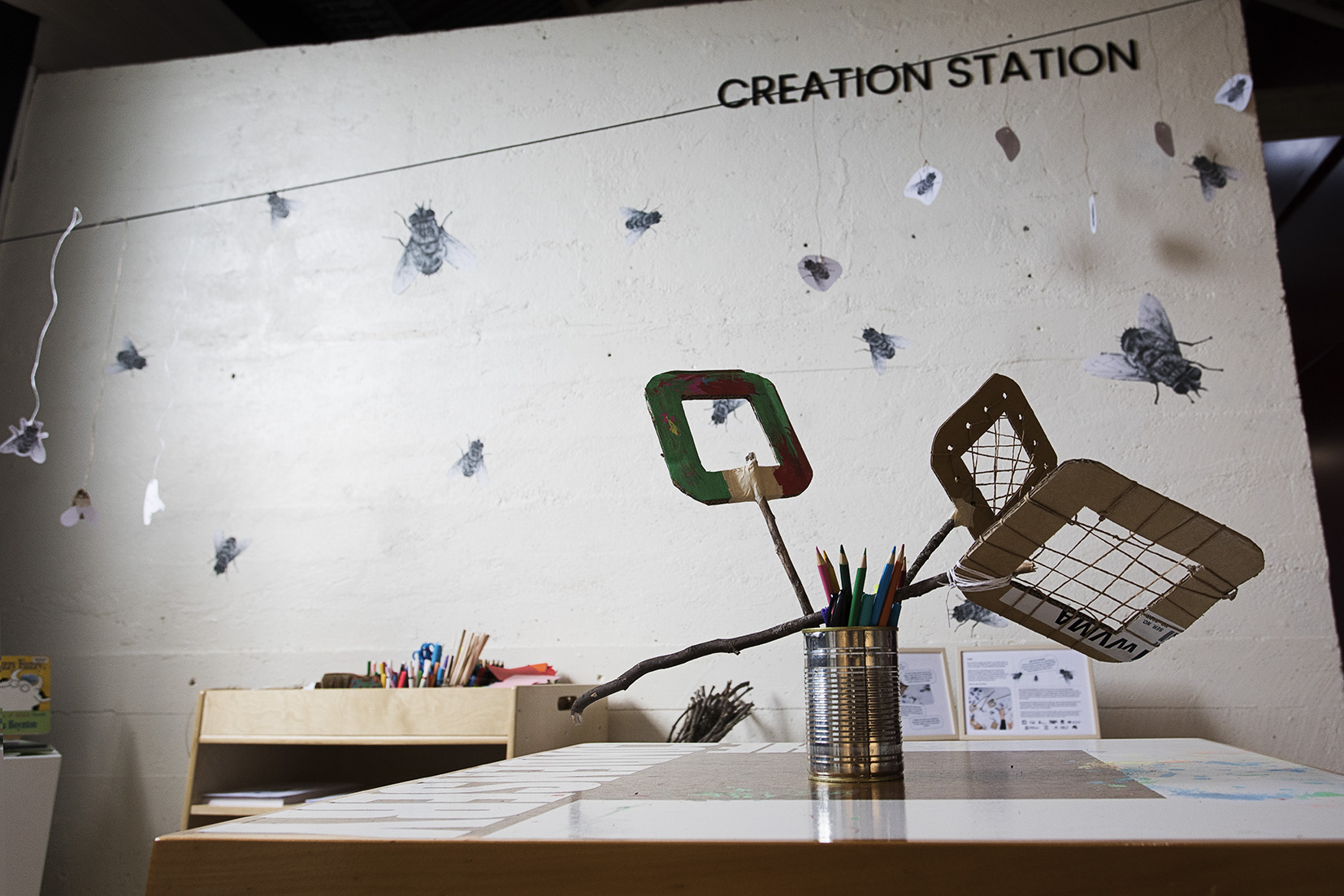
Anna Louise Richardson, The Good, Creation Station at The Condensery, QLD, 2023. Photo: Jim Filmer
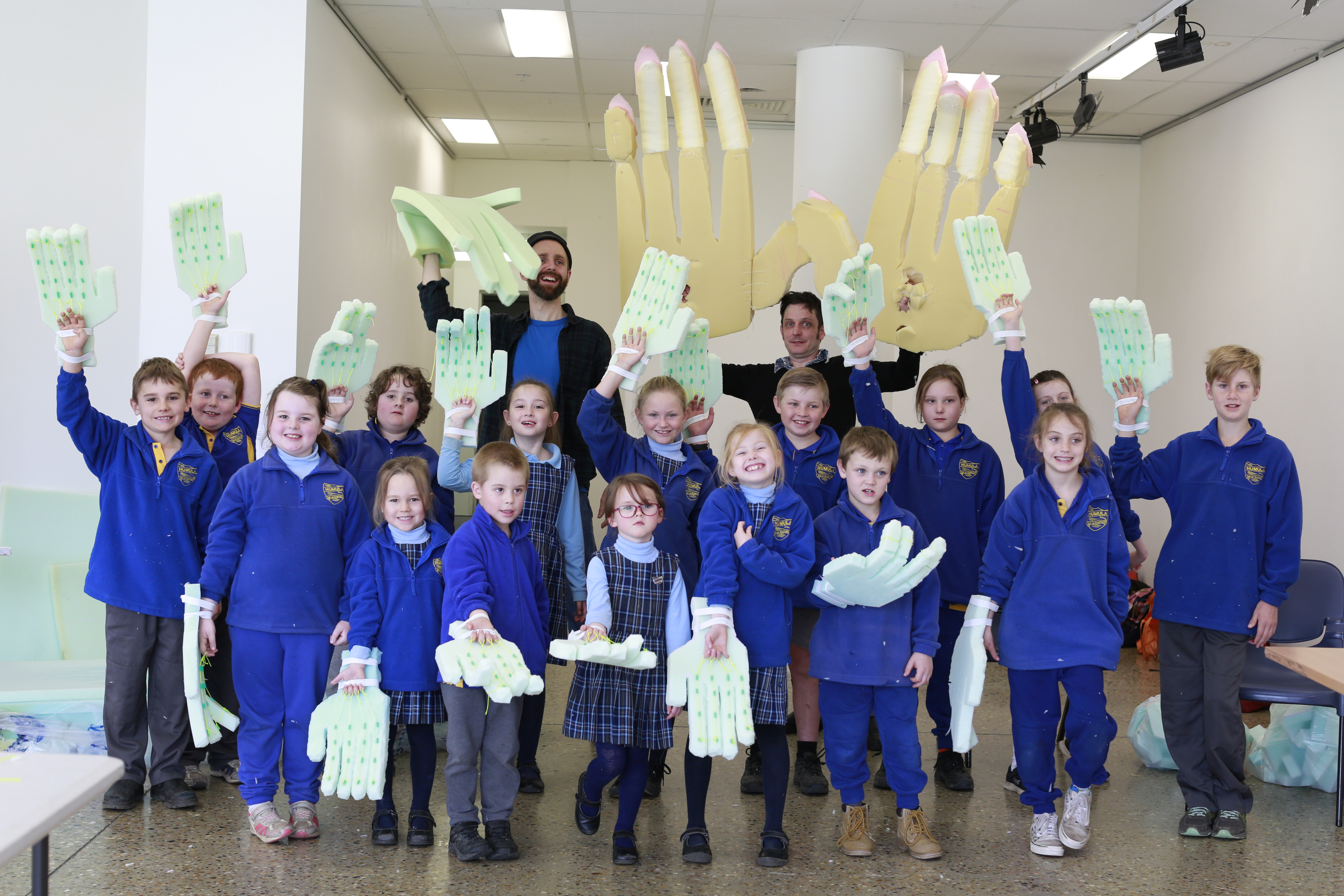
Humula Public School students take part in a workshop with Soft Core artists Tully Arnot and Simon Yates at Wagga Wagga Art Gallery. Photo: Tayla Martin
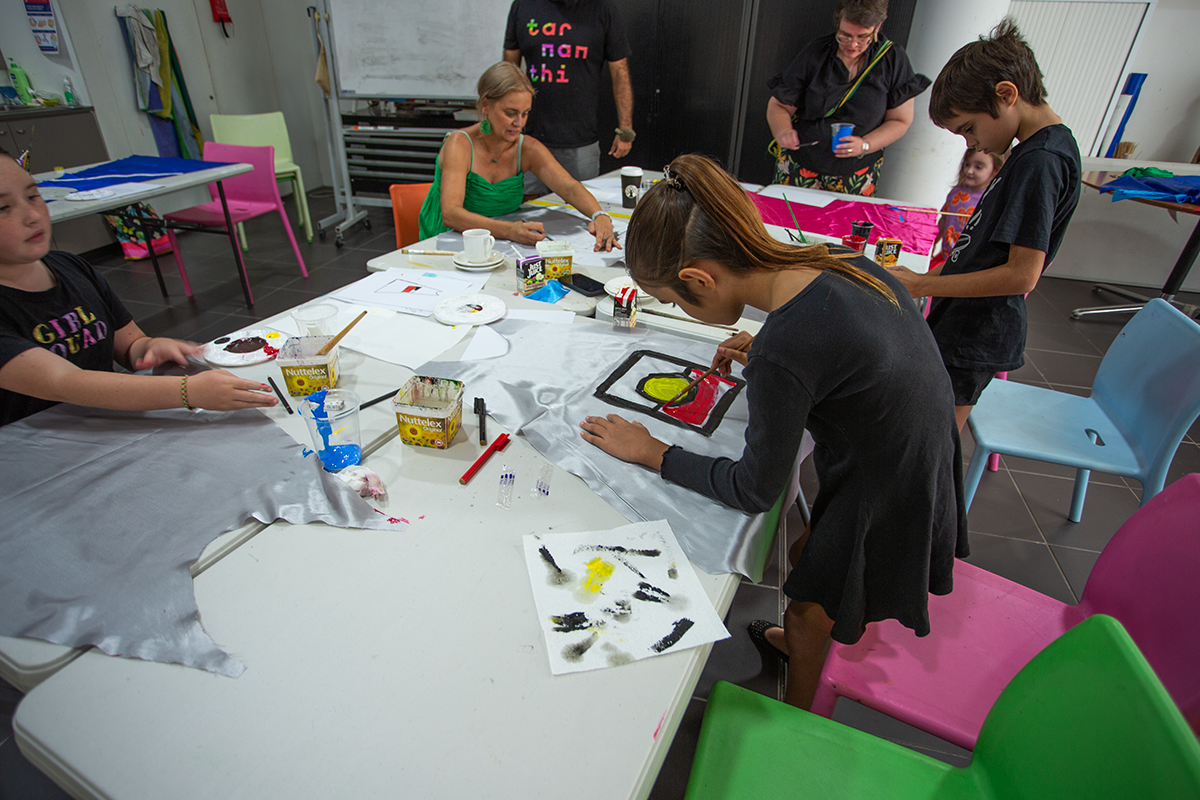
Cape making workshop with Dennis Golding, Wagga Wagga Regional Gallery, POWER -The Future is Here. Photo: Courtesy Wagga Wagga Regional Gallery.

Makers Space at Wangaratta Art Gallery's presentation of Primavera, 2025. Photo: Jeremy Weihrauch
A river runs through | EDUCATION AND LEARNING
All M&G NSW touring exhibitions are accompanied by an Exhibition Information Pack, which includes artwork lists, promotional details, installation guides, marketing templates, an Education Kit and Mediation Handbook, among other useful details to assist with a successful exhibition. These packs are modified and adapted to suit the needs of individual tours.
A Mediation Handbook will be developed for A river runs through utilising accessible language describing practice and exhibition themes. Messih’s work uses abstraction to open new ways of thinking about the body, identity, and ecological perspectives. The handbook will incorporate information, links, further reading and suggestions to help support staff and volunteers to relate to and speak about the themes of the show with confidence. It will also include a Glossary of key terms such as gender, capitalism, abstraction and ecology.
The Education Kit will offer educational opportunities for primary, secondary and tertiary students and teachers across visual arts, visual literacy, geography, creative writing, environmental science and social history. It will provide opportunities for teaching staff to ensure that students ‘receive an education that includes culture, creativity, humanities and the arts,’ consistent with the principles of the REVIVE framework. This design-led, modular and site-responsive Education Kit will draw on the tested models of Zoe Sadokierski’s Urban Field Naturalist guides to invite critical and creative engagement with local waterways through queer and ecological lenses. Provocations include listening and mapping exercises, storytelling prompts, and material encounters, encouraging embodied responses to place.
The following links contain some recent examples of Education Kits and Mediation Handbooks accompanying M&G NSW tours:
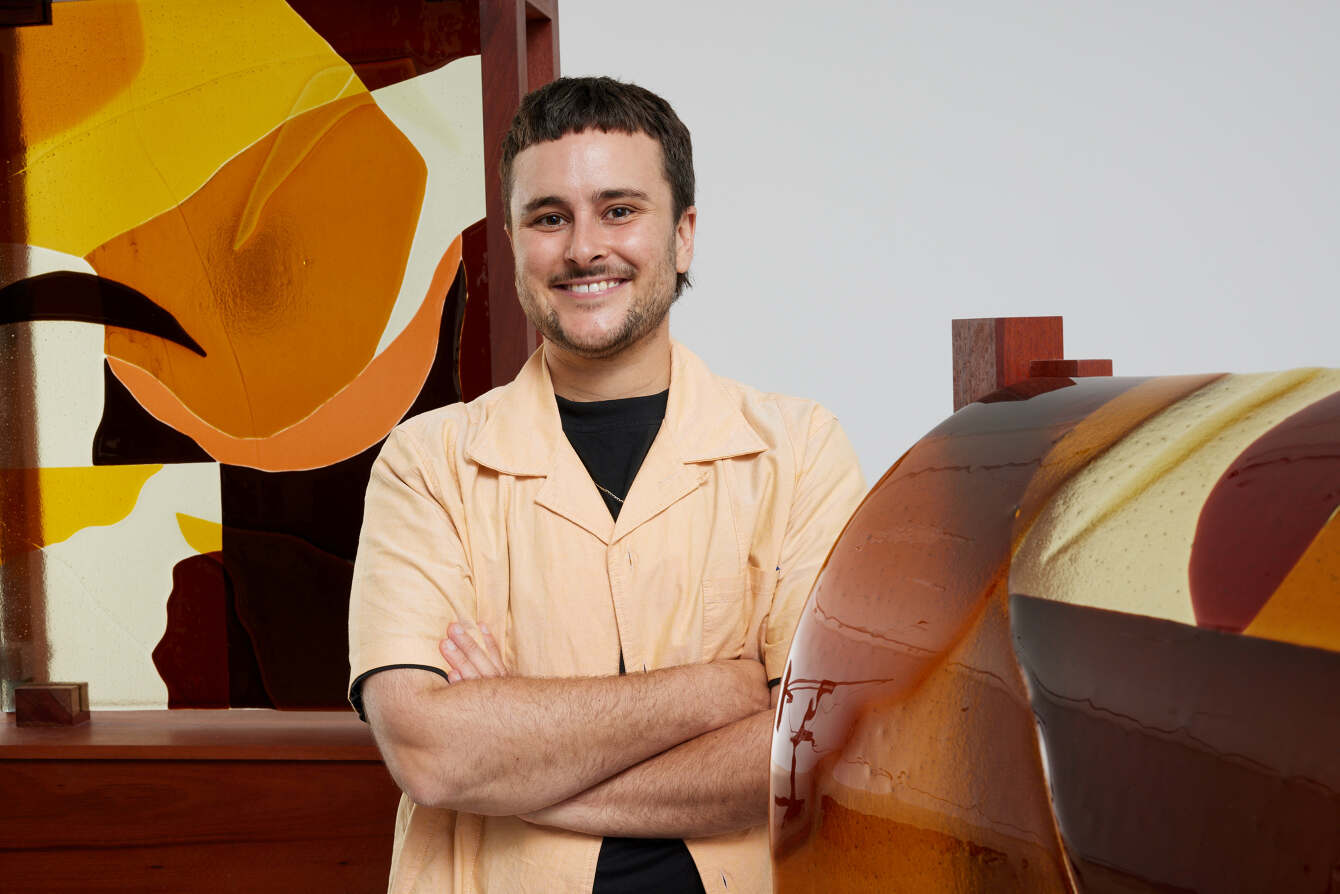
Portrait of artist Spence Messih with artwork Minor Truths, 2022
A river runs through | ENGAGEMENT TOOLS
To promote audience engagement with the stories and themes of the exhibition as well as the key REVIVE pillar of ‘making sure our stories connect with people at home and abroad’, a range of engagement tools will accompany A river runs through. These tools will allow audiences to connect both within the Gallery spaces and beyond, across multiple mediums, addressing the REVIVE principle that ‘Australian stories are seen and heard, regardless of platform.’
These resources invite diverse audiences to explore the intersections of identity, ecology, and systemic power that are expressed in Messih’s commissioned works. Each tool foregrounds queer/trans and environmental futures, fostering inclusive, embodied engagement across diverse contexts. They aim to broaden the possibility for connection with multiple audience segments and include:
- Artist Audio Interview highlighting Messih’s process and the exhibition’s conceptual framework.
- Audio-Described Tour narrated by the artist and guided by an Audio Description Specialist, exploring ideas of identity and ecology. To be available via QR codes in-gallery and online.
- Publication including four commissioned essays by Australian and International writers in a fold out configuration, with a locally printed version free for visitors.
- Accessible Content with audio described didactics and large font labels.









‘Messih’s masterful approach to making powerful work and communicating critical ideas aligns with our own commitment to fostering innovation and progressive risk taking in contemporary art, while the themes underpinning this particular show will deepen our community’s relationship to issues that affect our region and underpin our identity.’
‘Our previous collaboration (with M&G NSW) on the touring exhibition Void (2019–2022) demonstrated the strength of UTS’s curatorial programs, our shared commitment to supporting Australian artists to reach new audiences, and M&G NSW’s capacity to deliver thoughtful, well-supported exhibitions across diverse communities.’
‘Hosting A river runs through will resonate strongly with the local context of Goulburn, which sits at the nexus of the Mulwaree and Wollondilly Rivers and in proximity to the endorheic Weereea/Ngungara/Lake George. The exhibition’s thematic exploration of water, environmental systems, gender, identity, and community will provide meaningful points of connection for local audiences, enabling the Goulburn community to engage deeply with contemporary ideas around place, ecology, and social experience through Messih’s practice.’
The exhibition ‘considers the systems that govern bodies and environments, revealing the intricate connections between gender, capitalism, and water management. An interstate and regional tour of the exhibition would enable these ideas to be experienced in diverse local contexts, fostering dialogue about what solidarity can look like when social, cultural, and ecological identities are meaningfully acknowledged.’
‘The impact of A river runs through will be significant. The tour will expand access to ambitious contemporary art for audiences across New South Wales, support meaningful engagement through artist-led programs, and contribute to professional opportunities and career development for the artist.’
A river runs through | PUBLIC PROGRAMMING
M&G NSW works with venues to develop public programs tailored to their audiences and needs. Spence Messih’s practice lends itself to rich programming opportunities and engagement with communities interested in collective workshops and making, engaging with the natural environment, talks, film and storytelling. These are all powerful ways to connect audiences with galleries and to build social cohesion and community ownership of cultural spaces such as regional and public galleries.
A river runs through offers venues the opportunity to connect with the work of a highly regarded mid-career contemporary artist and engage with nationally significant content. Public programming at tour venues will provide broad opportunities for ‘all Australians, regardless of language, literacy, geography, age or education’ to ‘access and participate in arts and culture’, consistent with the pillars and principles of the REVIVE framework.
Messih’s experience as an educator and facilitator will strengthen the public programming element of the tour, ensuring that engagement programs with future regional audiences will be delivered in a professional and highly considered manner. The artist is also motivated to learn about how their work connects with audiences in varied locations:
The tour ‘would also allow me to engage directly with audiences through public programs, talks, and workshops, deepening my understanding of how the work resonates across different communities and places.’ Spence Messih
The exhibition includes a range of contemporary themes that will appeal to broad audiences including: gender and identity, waterways, environmental systems, water politics and conservation, ecological histories, First Nations water knowledge, cultural narratives shaped by waterways, capital accumulation and connection to place. These themes are a great starting point for developing public programming ideas and relating them to issues, interests and histories of local communities. Some examples of public programs across the tour might be:
River Walk – A guided walk along a local waterway, connecting ecological and identity themes. Participants will explore how rivers shape cultural narratives and environmental futures, with mediators linking these observations to Messih’s exhibition and queer ecological frameworks. This could be extended to include listening, observing and drawing activities.
Exploring & Making – River, creek and waterway exploration. Investigating local waterways and collecting visual information utilising putty pushed into surfaces or over services, to create impressions that can then be stamped onto paper in ink.
Screening & Reading Programs – Curated reading and film programs that expand on identity and place, and explore intersections of water, gender, and ecology, focusing on works such as:
- Gabriella Hirst, Darling Darling Two Channel video installation, 25:33.
- Eugenia Lim, Metabolism 2K Single Channel moving image, colour, sound, 29:15.
- Melody Paloma, Kitsch Sites Two Channel HD video, 29:08.
- Alana Hunt, Surveilling a Crime Scene Super 8mm film, 21:58.
- Ellen van Neerven & Alison Whittaker, 2014, Heat and Light, University of Queensland Press.
- Locally produced films and books relevant to each venue.
Workshops and Roundtables – Material-led practice-based programs with artists, researchers, and community leaders, combining observation, creative practice and storytelling activities. Participants engage with local ecologies through design-led provocations fostering embodied and creative responses to place and personhood.
Thinking with Nature – Exploring nature-based art and design practices, including making inks and dyes with plant-based pigments and non-extractive collection practices.
River Kin – Forums bringing together researchers, artists and postgraduate students who engage with bodies of water and the ‘sustaining matrix’ they provide to human and more-than-human beings. Contributors will include projects that engage communities through participatory, creative activities such as:
- Kirsten Wehner’s art and engagement project River Country; and Associate Prof. Alexandra Crosby, Associate Prof. Ilaria Vanni, Dr Sarah Jones, Associate Prof. Donna Houston, Prof. James Goodman, Prof. Juan Salazar and PHD researcher Holly O’Neill’s Resurfacing Urban Wetlands in Two Urban Renewal Sites in Sydney project
- First Nations-led projects highlighting Indigenous water knowledge and cultural practices such as the ongoing work of Prof. Bradley Moggridge, Kamilaroi hydrogeologist and UTS Associate Dean (Indigenous Leadership and Engagement)
- Projects that explore how historical museum archives can be connected back to the Country they were collected from
Extensive programming at a range of regional venues throughout the tour would contribute towards REVIVE achieving its commitment to ‘drive connection and access to creative work, support investment in Australia’s growing creative industries, foster and enable reciprocal arrangements for cultural engagement, co-production and touring…’

A UTS Gallery & Art Collection exhibition, supported by Creative Australia and Canberra Glassworks Artist Residency Program, and touring with Museums & Galleries of NSW.