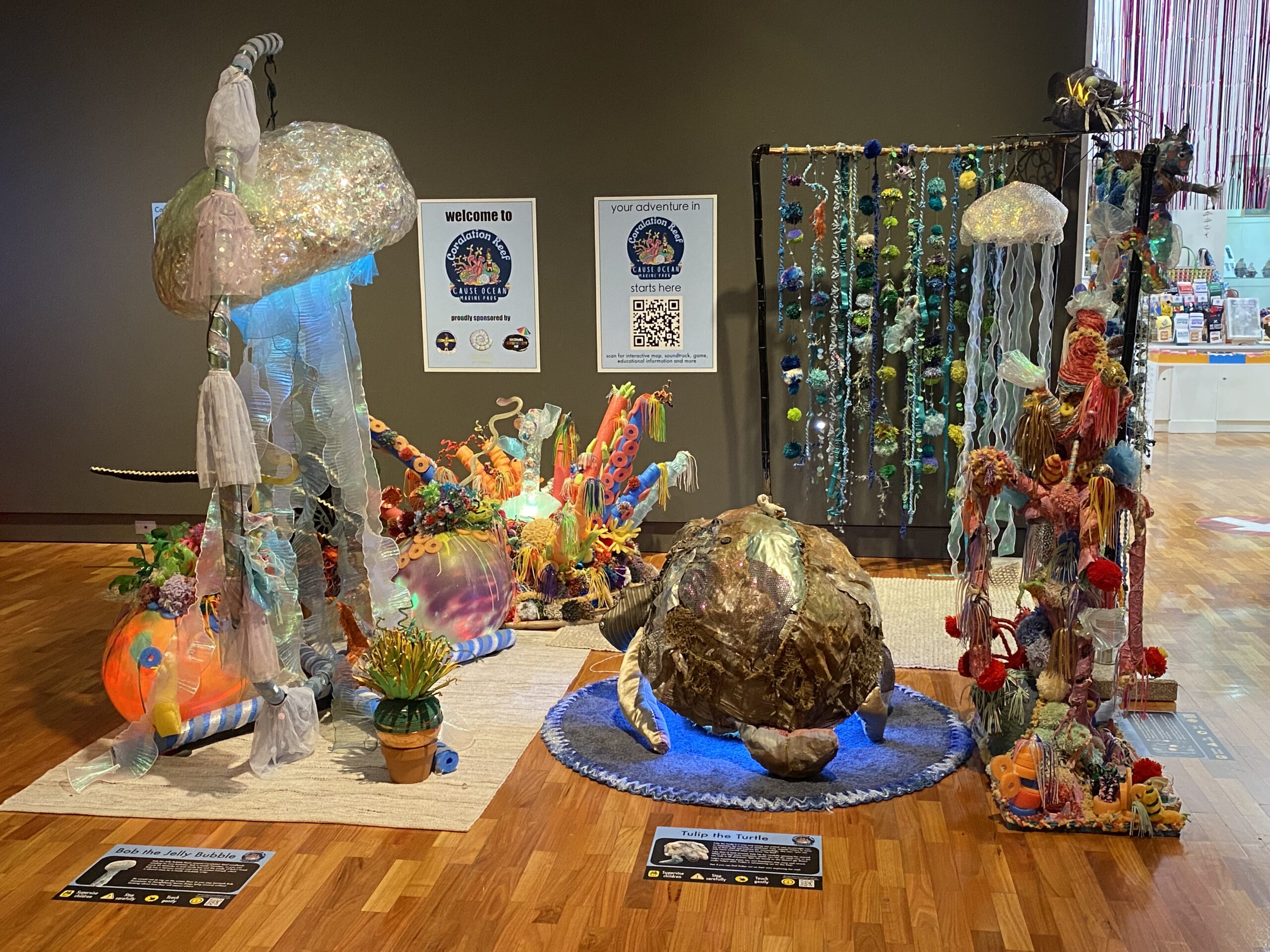
Installation view at Tamworth Regional Gallery of KATOOMBA NEURODIVERISTY HUB led by AMY BELL & ELIZA GOOCH Coralations 2025, mixed found and upcycled, fabric, wool, plastic fishing lures, cardboard plus purchased glue, glass balls, beads, lights, ribbons, paint, polymer clay, resin, plaster, umbrella stands, sequins 500 x 500 cm
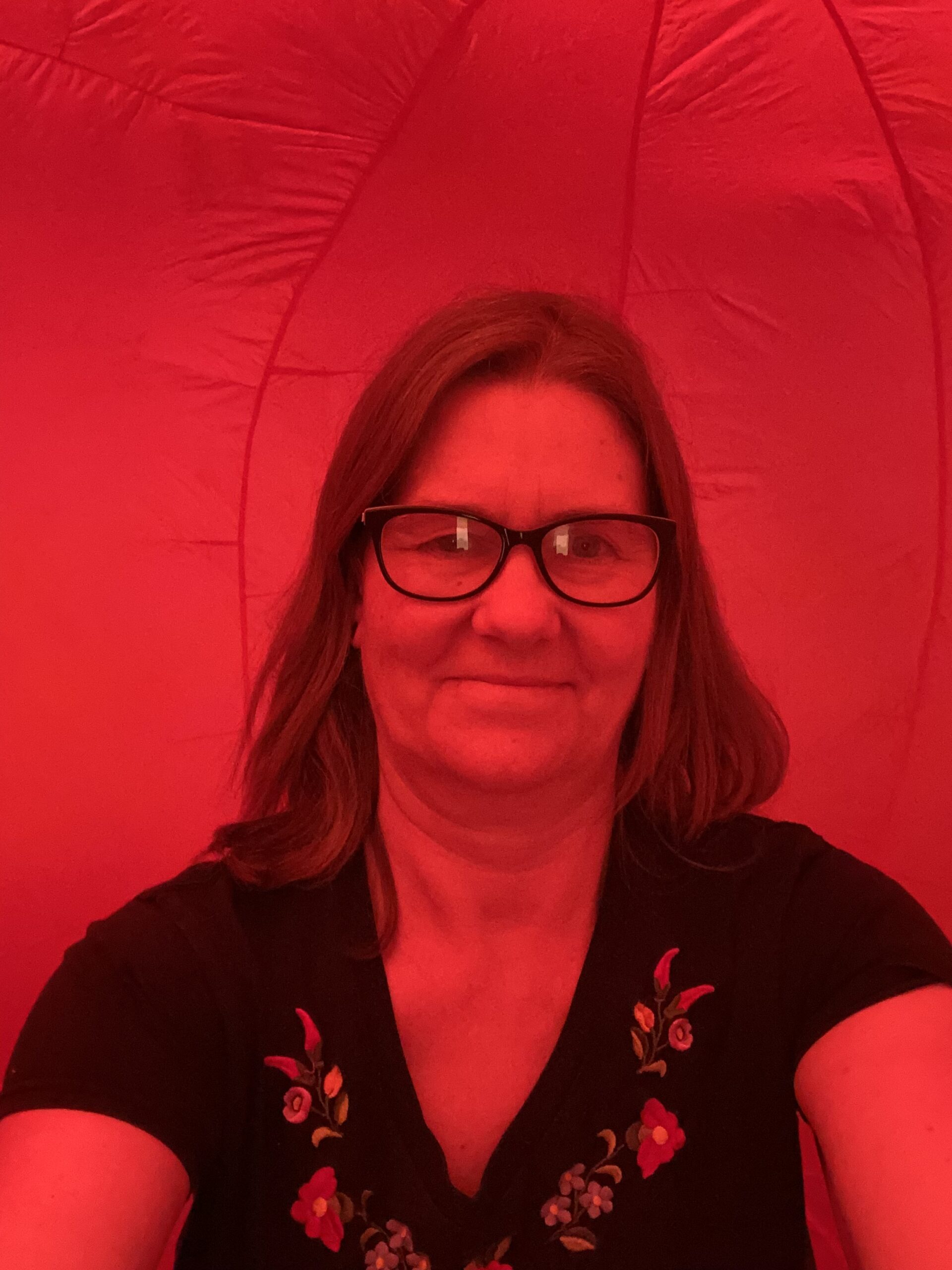
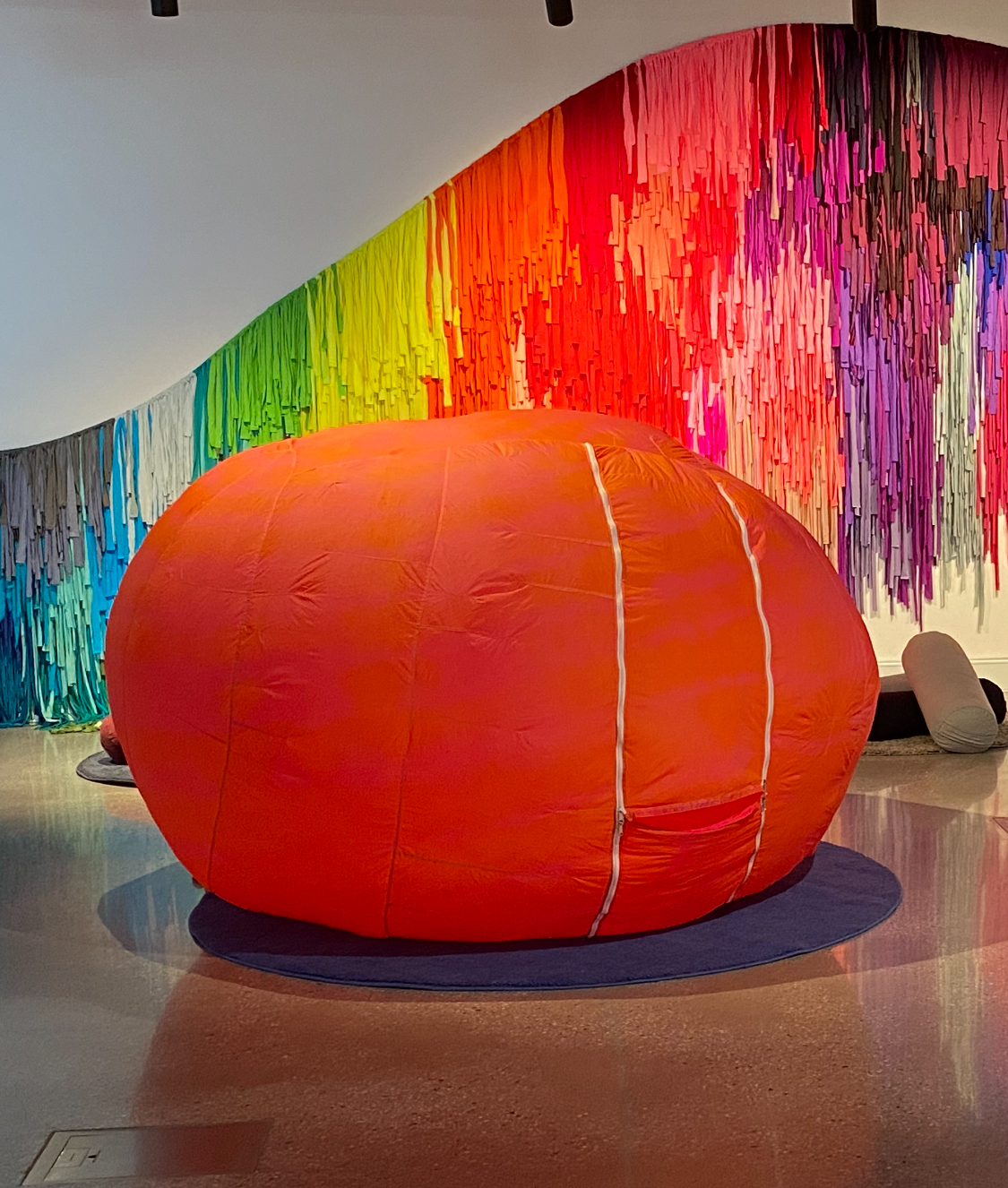
Rilka Oakley colour bathing inside Bailee Lobb’s Ahuriri 2022, hand-dyed nylon, mixed plastics, electronic fan, 180 x 150 x 160 cm.
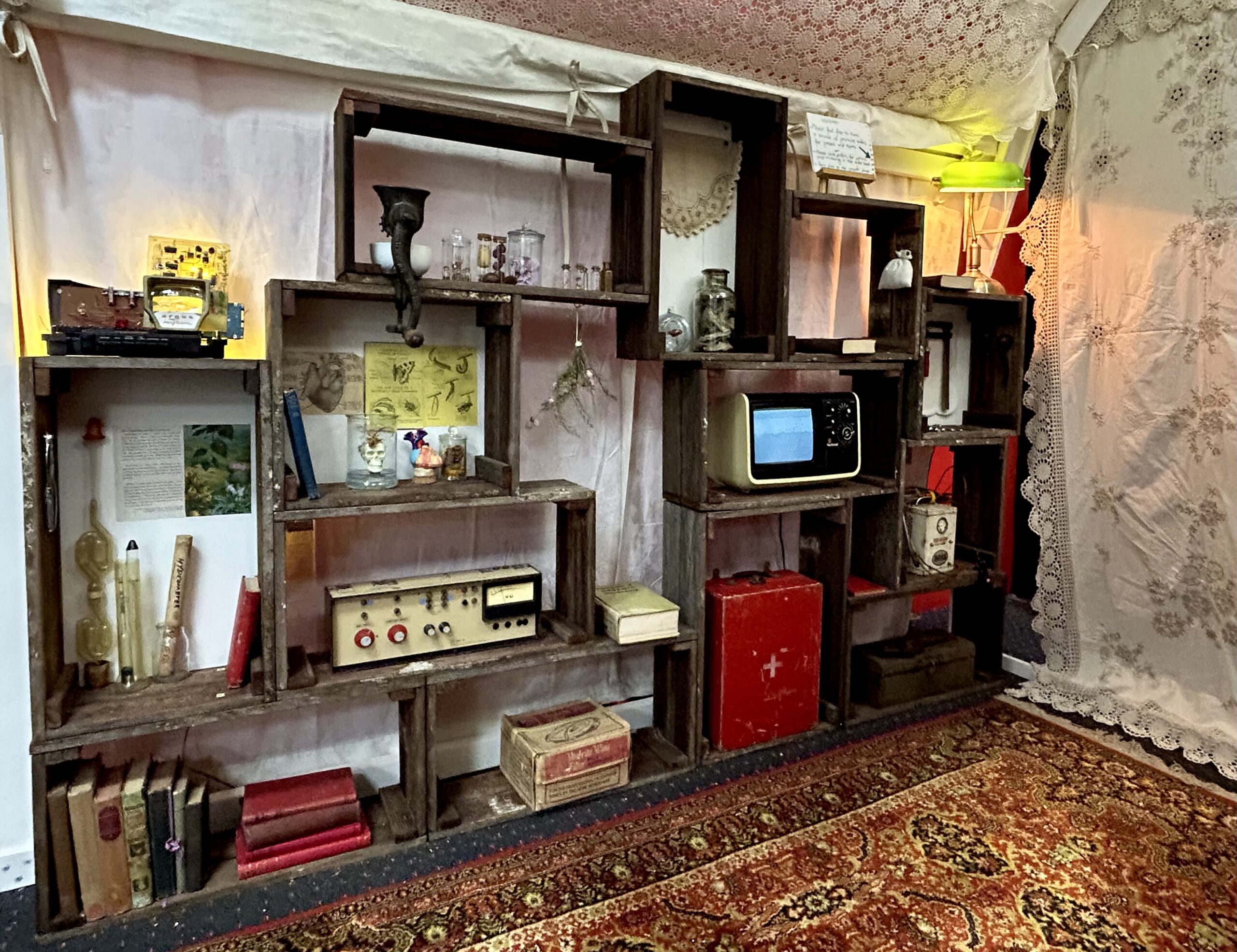
RAMANA DIENES-BROWNING The Hut – Waiting Room (detail) 2023-2025 assemblage, wood, paint, collected specimens, found objects, vintage and pre-owned tablecloths and fabric, video 249 x 249 x 179 cm. Photo: courtesy the artist
sensorial is a ground-breaking exhibition created with the neurodivergent community in mind. Audiences are encouraged to touch, listen and be immersed in the artworks, rather than simply observe them.
The exhibition, curated by Blue Mountains City Council’s Artistic Program Leader, Rilka Oakley, includes new and existing work made by neurodivergent and disabled artists, and those who work with them.
Originally supported by the Dobell Exhibition Grant, funded by the Sir William Dobell Art Foundation, and a recipient of the Accessible Arts Award for Access at the 2024 IMAGinE awards, sensorial has also been funded by Create NSW to tour to 4 venues across NSW
Artists featured in the touring exhibition include Alison Bennett with Megan Beckwith; Liam Benson; Ramana Dienes-Browning; Inspired by Art led by Clare Delaney; Katoomba Neurodiversity Hub led by Amy Bell; Bailee Lobb; Prue Stevenson and Hannah Surtees.
We asked Rilka Oakley to share her inights into the development of this innovative exhibition.
sensorial invites audiences to ‘move beyond sight’ and engage through touch and play. What curatorial shifts were required to challenge traditional ‘hands-off’ gallery conventions?
The works themselves invite physical engagement. There are works to get inside, touch, and interact with. This invitation to the gallery visitor to participate in the work is one of the main shifts the exhibition makes, and it was the show’s original intent. It allows people to touch colour, immerse themselves in a work that would normally be a visual experience only.
The neurodivergent artists and collectives wholeheartedly embraced the idea of presenting works that captivate our full range of senses and, most importantly, can be touched. The works are invitations to enter each artist’s world and consider their perspective.
Developed with and for the neurodivergent community, how did this collaboration shape the exhibition’s design, and what did you learn about embedding accessibility from the outset?
The biggest learning from this experience was obvious yet often overlooked: not all access needs are the same, and individuals need to be empowered and supported to look after their own needs while also respecting others.
An example: many people are sound and light sensitive and galleries often have lots of hard surfaces and bright lights. To make the space more accessible, we integrated floor rugs with many of the works that absorb sound, we created a sound barrier at the gallery door that also served as a sensory wall, and we had clear signage inviting people to use headphones or sunglasses if needed. Hard reflective sounds were minimised, and we also normalised looking after your own sensory needs.
In terms of embedding accessibility from the outset, it was about having conversations with each artist, talking through what they wanted to achieve, and then brainstorming solutions that would suit most gallery visitors. For example, there is a ceiling projection viewed from lying on a bed – not everyone can get themselves onto the bed, so we also provided a version to view on a TV screen on the wall.
As sensorial tours to regional venues across NSW, what new insights have emerged about adapting immersive, sensory experiences for different spaces, audiences and communities?
This was a timely exhibition that really resonated with local audiences in the Blue Mountains. Adults and children loved the interactivity and the sensory experience. Many came back multiple times, and it was noted that visitors stayed for significant periods of time in the gallery.
The exhibition has been to two touring venues, and the visitor engagement has been similar to ours with the original exhibition. Once the hands-off condition is removed, visitors get very excited about physically exploring the work, and this can lead to unexpected things. The main lesson is that all interactive works need to be indestructible. Clear instructions from the artist, curator and gallery help.
The exhibition was supported by a Dobell Exhibition Grant. How did that funding aid the development of sensorial, and what difference did it make to the ambition or scope of the project?
The Dobell grant enabled us to commission four new works, enabled us to have appropriate consultation and employ the services of an autism advocate and consultant, commission a neurodivergent writer, support artists to participate in our public programs and pay for some additional materials, creating engaging and substantial public programs and engagement activities.
Having the extra funds to fully explore the ideas artists were working with made a significant difference to the exhibition and the finished installations. We were also able to support several artists attending the opening event who might not otherwise have been able to attend.
Insights interview conducted by Susan Wacher, Exhibitions & Programs Manager, Museums & Galleries of NSW.
Insights is an interview series highlighting the voices of museum and gallery professionals across New South Wales. The series features conversations with individuals working at the forefront of the sector, demonstrating how their ideas, leadership and day-to-day practice contribute to a more vibrant, resilient and inclusive future for museums, galleries and Aboriginal cultural centres.
If you would like to participate in our Insights series, please get in contact.